Transport & Delivery
IBC tote pickup and delivery in Chicago and the suburbs, arranged through partner suppliers. Availability depends on the supplier.
Get a Free Quote
Free, no-obligation quote request
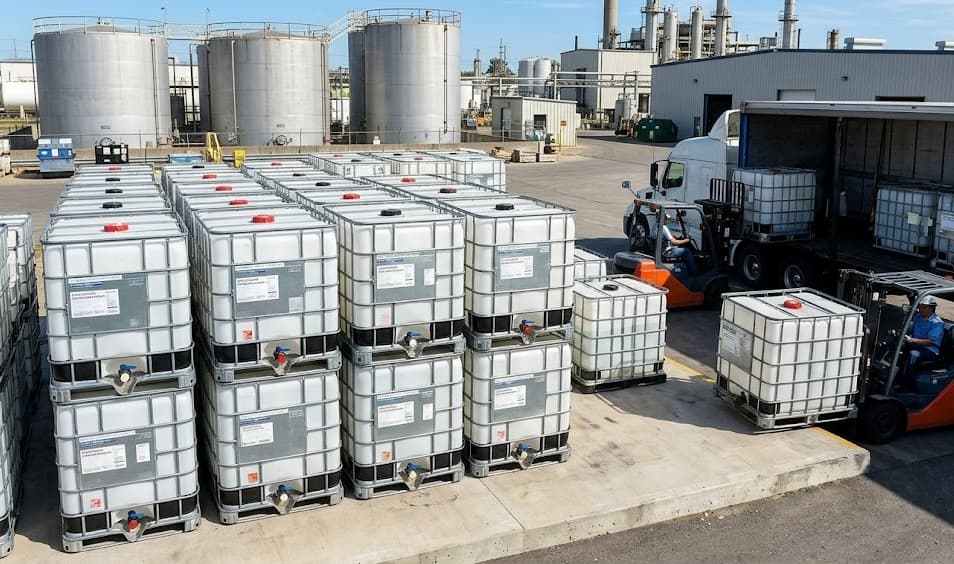
Pickup and Delivery Through Partner Suppliers
Pickup and Delivery Requests Across Chicagoland
We take requests from Chicago and the Chicagoland area, and pass them to partner suppliers. Availability depends on the supplier.
Chicago and Cook County
Chicago city limits and suburban Cook County
DuPage and Kane Counties
Western suburbs and the Fox Valley
Lake and McHenry Counties
Northern suburbs
Will County
Southwest suburbs
Do not see your suburb listed? If you are in the Chicagoland area, send a request anyway. A partner supplier follows up if it can help.
Common Ways IBC Totes Are Transported
IBC Recycling Chicago does not own vehicles. This is a general guide to how totes are usually moved, so you can tell a partner supplier what your site needs.
Flatbed Trucks
Flatbeds are a common way to move totes, since they can be loaded from the side or rear with a forklift.
Box Trucks With Liftgate
Enclosed trucks keep totes out of the weather, and a liftgate can help where a site has no dock. Liftgates have weight limits, so they are generally suited to empty totes.
Full-Size Trailers
Larger quantities may move on a full-size trailer, which needs enough space to reach and turn at your site.
Sites Without a Forklift
Totes are heavy and awkward to move by hand, even when empty. If your site has no forklift, say so up front so the supplier can tell you what is possible.
Scheduling Is Set With the Supplier
We do not schedule trucks. Once a partner supplier follows up, you agree pickup or delivery timing directly with them. What is possible depends on the supplier and on its other work.
If you have constraints, put them in your request. The more a supplier knows up front, the fewer calls it takes to settle the details.
What to Include in Your Request
Pickup and Delivery Locations
The city or suburb at each end of the trip.
Quantity and Size
How many totes, and whether they are 275 or 330 gallon.
Full or Empty
Whether the totes are empty, and what they held.
Site Access
Whether you have a dock or forklift, and any limits on truck size.
Receiving Hours
When your site can receive or release totes.
Regular Moves
If this will happen regularly, tell the supplier how often.
When Timing Matters
We cannot promise a date, but we can pass your deadline along. Here is how to give a supplier the best chance of meeting it.
State the Deadline
Say exactly when totes need to arrive or leave, and why, such as a lease ending or a cleanout.
Be Flexible on Type
If you can accept a different grade or tote type, say so. It can widen what a supplier is able to offer.
Have Details Ready
Keep counts, prior contents, and site details handy so the supplier does not need to come back to you.
Consider Collecting
If you have a suitable trailer, ask whether collecting from the supplier is an option.
Loading, Unloading, and Material Handling
IBC totes sit on a pallet with a footprint of about 40 x 48 inches and are generally moved with a forklift or pallet jack. Who loads and unloads is something to settle with the supplier before the truck arrives.
A site with a dock is usually the simplest to serve. At ground level, you will generally need a forklift of your own or a truck with a liftgate.
What to Settle With the Supplier
Damage Prevention During Transit
IBC totes are durable, but poor handling can still damage them. These are common good practices when totes are on the road.
Strapping
Totes are generally strapped down so they cannot shift, without crushing the cage.
Edge Protection
Protectors between straps and cages help prevent dents and bent bars.
Weather Protection
Enclosed trucks or tarps keep rain and road spray off totes that need to stay clean.
Careful Stacking
Stacking limits appear on the tote and vary by condition. Never assume a used tote can be stacked.
Valves Closed
Valves and caps should be closed and checked before loading.
DOT Rules in General Terms
Commercial freight in the US falls under Department of Transportation (DOT) rules, including requirements on cargo securement. Rules on packaging and shipping regulated goods sit in 49 CFR.
What applies depends on what the tote holds or held. A clean, empty tote is a very different load from one with residue or product inside, so tell the supplier exactly what you are moving.
This is a general overview, not compliance advice. Check current regulations for your materials. IBC Recycling Chicago does not offer transport of regulated loads.
Questions to Ask a Supplier
Transport arrangements vary, so settle these points before the truck is booked.
Who Is Moving the Totes?
Ask whether the supplier uses its own vehicle or an outside carrier.
What Is Included in the Quote?
Confirm whether loading, unloading, and any wait time are included.
What Happens if a Tote Is Damaged?
Ask who is responsible for damage in transit, and how to report it.
How Will I Know When It Is Coming?
Agree how you will be told about the arrival time.
Moving Larger Quantities
Moving totes in larger batches is generally more efficient than making several small trips. A partner supplier can tell you what makes sense for your quantity.
Empty totes are bulky but light, so space tends to be the limit. Full totes are much heavier, so weight becomes the limit, and they call for a separate conversation with the supplier.
If you have several sites around Chicagoland, list them all in your request. A supplier may be able to combine stops.
What Affects a Transport Quote
Pricing is by quote from partner suppliers. These are the things that usually affect it.
Distance
How far the totes need to travel, including tolls on the route.
Quantity
How many totes are moving, and whether they fill a truck.
Vehicle Type
What kind of truck the job needs, and whether a liftgate is required.
Site Access
How easily a truck can reach your totes, and who does the loading.
Fuel
Fuel prices can affect what carriers charge. Ask whether a quote includes fuel.
Need IBC Totes Picked Up or Delivered?
Tell us what needs to move, from where, and to where. We pass your free, no-obligation quote request to a partner supplier, and a partner supplier follows up. Availability depends on the supplier.
Frequently Asked Questions About IBC Tote Transport
Pickup and delivery answers for IBC totes in Chicago and the Chicagoland suburbs.
What areas can I request IBC tote pickup or delivery in?
We take requests from Chicago and the Chicagoland area, including Cook, DuPage, Lake, Will, Kane, and McHenry counties. Availability depends on partner suppliers.
Who actually moves the totes?
Partner suppliers, or the carriers they work with. IBC Recycling Chicago does not own trucks or employ drivers. We pass your request to a partner supplier, and a partner supplier follows up.
Can full totes be moved?
Ask the supplier before you plan on it. Full totes are much heavier than empties and may be subject to DOT rules depending on what they hold, so check current regulations. Most requests involve empty totes.
How much does IBC tote delivery cost?
Pricing is by quote from partner suppliers. It usually depends on distance, quantity, vehicle type, and site access.
Can I arrange regular pickups or deliveries?
That depends on the supplier. If you need totes moved on a regular basis, say so in your request and discuss it with the supplier that follows up.