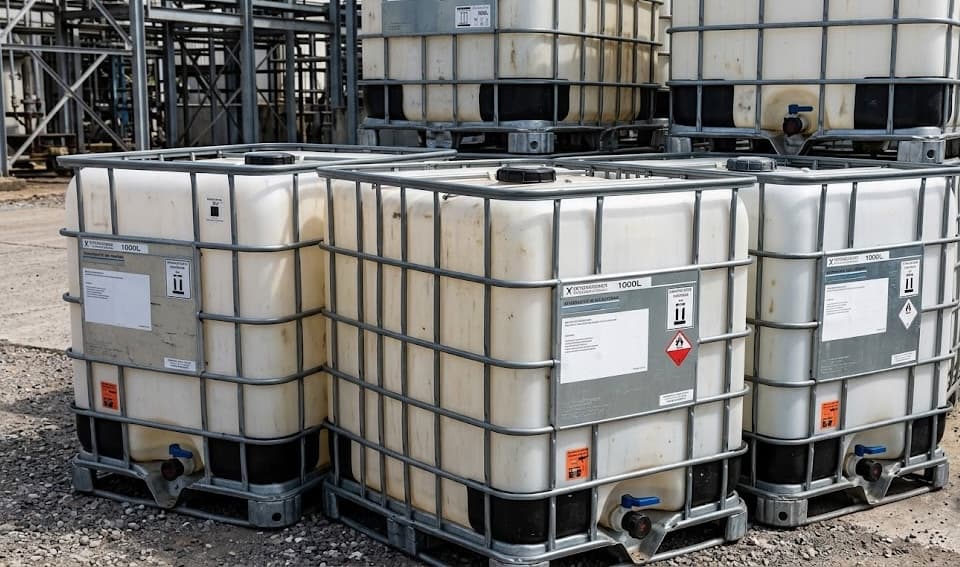
Table of Contents
1. What Is an IBC Tote?
An Intermediate Bulk Container (IBC), commonly known as an IBC tote, IBC tank, or simply a tote, is a reusable industrial-grade container designed for the transport and storage of bulk liquid and granulated materials. IBCs bridge the gap between standard 55-gallon drums and full-size tanker trucks, offering an efficient middle-ground for businesses that need to move large quantities of product without committing to tanker-level infrastructure or handling hundreds of individual drums.
IBC totes are pallet-mounted, meaning they sit on an integrated pallet base that allows for easy handling with forklifts, pallet jacks, and standard warehouse equipment. This design makes them exceptionally practical for loading docks, warehouse operations, production lines, and over-the-road transportation. A standard IBC tote holds between 275 and 330 gallons (approximately 1,040 to 1,250 liters) of liquid, though specialty models range from as small as 120 gallons up to 550 gallons for heavy industrial applications.
IBCs are used across virtually every industry: chemical manufacturing, food and beverage processing, pharmaceuticals, agriculture, cosmetics, water treatment, petroleum products, construction, automotive, and more. Their versatility, stackability, standardized footprint, and reusability make them one of the most cost-effective and environmentally responsible bulk storage solutions available today. A single IBC replaces five to six 55-gallon drums, dramatically reducing handling labor, packaging waste, and shipping costs.
The most common IBC configuration is the composite IBC, which consists of a blow-molded HDPE (High-Density Polyethylene) inner bottle housed within a galvanized tubular steel cage, mounted on a wood, plastic, or steel pallet base. This combination provides the chemical resistance and food-safety of HDPE with the structural strength and stackability of steel, creating a container that is both lightweight and rugged enough for demanding industrial use.
2. History and Evolution
The concept of the Intermediate Bulk Container emerged in the late 1970s and early 1980s as global trade expanded and industries sought more efficient alternatives to the ubiquitous 55-gallon steel drum. Before IBCs, businesses faced an awkward logistics gap: drums were manageable in size but required multiple units (and significant labor) to handle the same volume that a single IBC could hold, while tanker trucks were too large and expensive for mid-volume shipments. The chemical industry, in particular, drove demand for a standardized mid-range container that could be safely transported by truck, rail, and ship.
The first generation of IBCs were rigid metal containers, typically fabricated from carbon steel or stainless steel. These early metal IBCs were designed primarily for the chemical and petroleum industries, where durability and compatibility with aggressive chemicals were paramount. While effective, they were heavy (300 to 500+ pounds empty), expensive, and difficult to clean for product changeover. Their weight alone made them impractical for many applications.
The transformative breakthrough came in the late 1980s and early 1990s with the invention of the composite IBC. Engineers at companies including Schutz (Germany) and Mauser (now part of MAUSER Packaging Solutions) developed a design that combined a blow-molded HDPE inner bottle with a welded tubular steel cage and an integrated pallet base. This composite design slashed the empty weight to roughly 120 to 145 pounds while maintaining chemical compatibility (via the HDPE bottle) and structural integrity (via the steel cage). The composite IBC was lighter, cheaper to produce, easier to clean, and compatible with existing forklift and pallet-jack infrastructure.
Standardization followed rapidly. The United Nations developed performance testing and marking requirements for IBCs in the 1990s, codified in the UN Recommendations on the Transport of Dangerous Goods. These standards (such as the UN 31HA1 designation for composite IBCs with bottom discharge) created a universal framework that allowed IBCs to move across international borders with consistent safety expectations. The U.S. Department of Transportation (DOT) adopted compatible regulations under 49 CFR, and equivalent standards were adopted in Europe (ADR), Asia, and elsewhere.
By the 2000s, the composite IBC had become the dominant global standard for mid-volume bulk liquid transport. The rise of the reconditioning industry — where used IBCs are disassembled, fitted with new bottles, and returned to service — added a sustainability dimension that further accelerated adoption. Today, tens of millions of IBCs are manufactured, used, reconditioned, and recycled annually worldwide. The IBC industry has also driven innovation in related areas, including advanced cleaning systems, smart monitoring (IoT sensors for fill level and temperature), and recyclable pallet materials.
3. Types of IBC Totes
IBC totes are manufactured in five primary categories, each engineered for specific applications, chemical environments, and budgets. Understanding the differences is essential for selecting the right container for your needs.
Composite IBCs (HDPE Bottle + Steel Cage)
The composite IBC is by far the most common type in use worldwide, accounting for an estimated 85 to 90 percent of all IBCs in circulation. It features a blow-molded HDPE inner bottle that holds the actual product, surrounded by a galvanized tubular steel cage that provides structural support, impact protection, and stackability. The assembly sits on an integrated pallet base (wood, plastic, or steel) for forklift and pallet-jack handling from all four sides.
Composite IBCs are favored for their versatility: the HDPE bottle is compatible with the vast majority of chemicals, acids, bases, and food products, while the steel cage ensures that the relatively flexible plastic bottle maintains its shape under the weight of stacked containers, during transport vibrations, and through forklift handling. The translucent bottle also allows visual level checks without opening the container, a simple but valuable operational advantage.
Composite IBCs are available in 275-gallon and 330-gallon sizes (with specialty sizes from 120 to 550 gallons), carry UN 31HA1 or 31HH1 designations, and weigh 120 to 145 pounds empty. They are suitable for food-grade, chemical, agricultural, pharmaceutical, water treatment, and general industrial applications. Their primary limitation is temperature: HDPE begins to soften at sustained temperatures above 140 degrees Fahrenheit, making them unsuitable for hot-fill applications without cooling first.
Rigid Plastic IBCs (No Cage)
Rigid plastic IBCs are constructed entirely from HDPE without an external steel cage. The bottle itself is molded with thicker walls and reinforced corners to provide standalone structural integrity. They sit on an integrated plastic or wood pallet and typically have a single top opening and a bottom discharge valve, similar to composite IBCs.
Without the steel cage, rigid plastic IBCs are lighter (80 to 100 pounds empty) and generally less expensive than composite models. However, they sacrifice stackability — most rigid plastic IBCs cannot be stacked when full because the plastic walls lack sufficient compression strength to support an upper container. This limits their usefulness in warehouses with vertical storage and in any scenario where stacking loaded containers is required.
Rigid plastic IBCs are most commonly used for single-trip applications, non-hazardous liquids, water, and scenarios where the containers will be stored at ground level. They carry the UN 31H1 designation. Their lighter weight can reduce shipping costs for single-use or limited-cycle applications where the tote will not be returned or reused extensively.
Stainless Steel IBCs
Stainless steel IBCs are the premium option for demanding environments. Fabricated from 304 or 316-grade stainless steel, these containers offer exceptional corrosion resistance, temperature tolerance (suitable for both hot and cold applications far beyond HDPE limits), and an extremely long service life of 20 to 30+ years with proper maintenance. They are fully weldable, allowing custom ports, fittings, and configurations.
316-grade stainless steel includes molybdenum, which provides superior resistance to chlorides, acids, and marine environments. This makes 316 IBCs the standard choice in pharmaceutical manufacturing, high-end food processing, and any application involving chlorinated cleaning agents or salt-based products. 304-grade stainless is suitable for most other industrial and food-grade applications and is less expensive than 316.
Stainless steel IBCs are heavy (200 to 500+ pounds empty) and expensive (typically $2,000 to $5,000+ new), but their extraordinary durability and near-unlimited cleaning cycles make them the most cost-effective option over a long enough time horizon. They carry UN designations 31A (carbon steel) or 31B (aluminum, though rare), with stainless being classified under 31A. They can be steam-sterilized, CIP (Clean-in-Place) washed, and autoclaved — processes that would destroy HDPE bottles.
Flexible IBCs (FIBCs / Bulk Bags)
Flexible Intermediate Bulk Containers, commonly known as bulk bags, super sacks, or FIBCs, are made from woven polypropylene fabric and designed for dry granular materials such as sand, grain, chemicals in powder form, fertilizers, and construction aggregates. They are not used for liquids (unless equipped with a polyethylene liner for semi-liquid or slurry applications).
FIBCs are extremely lightweight (5 to 15 pounds), collapsible for return shipping, and very cost-effective for single-use applications. Standard FIBCs hold between 2,000 and 4,000 pounds of material. They feature lifting loops at the top for crane or forklift handling and may include bottom discharge spouts for controlled emptying. While technically classified as IBCs, they serve a fundamentally different market than rigid or composite IBCs and are not interchangeable for liquid storage.
Carbon Steel IBCs
Carbon steel IBCs are full-body metal containers fabricated from carbon steel plate, typically galvanized or epoxy-lined for corrosion protection. They offer excellent structural strength and are suitable for applications where HDPE chemical compatibility is insufficient or where high-temperature storage is required. Carbon steel IBCs are heavier and less chemically versatile than stainless steel models but cost significantly less.
These containers are most commonly used in the petroleum industry (for lubricants, fuels, and waste oils), in chemical manufacturing (for products incompatible with HDPE), and in high-temperature applications. They can be lined with various coatings (epoxy, phenolic, PTFE) to extend their chemical compatibility. Carbon steel IBCs carry the UN 31A designation and typically weigh 200 to 400 pounds empty, with capacities from 110 to 550 gallons.
4. Component Breakdown
A composite IBC tote consists of six main components, each serving a critical function in the container system. Understanding these parts in detail helps with maintenance, replacement, inspection, reconditioning decisions, and troubleshooting.
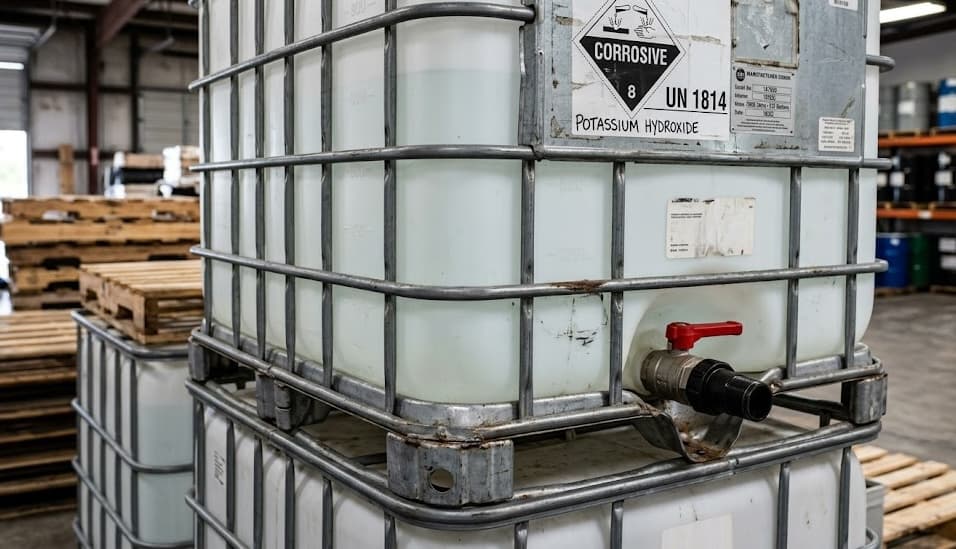
IBC tote valve and UN label detail
Inner Bottle (HDPE Container)
The HDPE blow-molded inner bottle is the heart of a composite IBC — it is the only component in direct contact with the stored product. Manufactured from high-density polyethylene using extrusion blow molding, the bottle is formed as a single seamless piece with uniform wall thickness (typically 3 to 5 mm) to ensure consistent structural performance and chemical resistance. The translucent natural color of HDPE allows operators to visually estimate the fill level without opening the container, though some bottles are produced in white, black, or blue for UV protection or product differentiation.
Food-grade bottles are manufactured from virgin FDA-compliant HDPE resin (meeting 21 CFR 177.1520) and are free from post-consumer recycled content, colorants, or additives that could migrate into food products. Industrial-grade bottles may use standard HDPE resin with UV stabilizers or other additives to extend outdoor service life. Some specialty bottles are fluorinated (treated with fluorine gas after molding) to create a barrier layer that reduces permeation of solvents, fuels, and aromatic chemicals through the HDPE wall — these are commonly called barrier-treated or F-treated bottles.
The bottle is the component most commonly replaced during reconditioning, a process called rebottling. During rebottling, the old bottle is cut out of the cage, a new bottle is blow-molded directly into the existing cage (in some processes) or a pre-molded bottle is inserted and secured. A new valve, lid, and gaskets are installed, and the tote receives a fresh UN date stamp, effectively restarting its 5-year certification clock. The used bottle is shredded and recycled into HDPE pellets for manufacturing new products.
Steel Cage (Protective Frame)
The galvanized tubular steel cage is the structural backbone of a composite IBC. It consists of a network of vertical and horizontal steel tubes (typically 20 to 25 mm diameter) welded at each intersection point to form a rigid three-dimensional frame that completely surrounds the inner bottle. The cage serves multiple critical functions: it protects the bottle from impacts, punctures, and abrasion during handling and transport; it provides the compression strength that enables stacking (up to two loaded IBCs high); and it shields the HDPE from UV radiation exposure that would otherwise accelerate degradation.
Cage tubes are hot-dip galvanized (zinc-coated) after welding to provide corrosion resistance. The galvanizing process deposits a zinc layer of 40 to 80 microns that protects the underlying steel from rust even when exposed to moisture, chemicals, and outdoor weather conditions. High-quality cages can remain structurally sound for 15 to 20+ years, far exceeding the 5-year service life of the HDPE bottle, which is why rebottling is so economically and environmentally compelling — the most expensive and energy-intensive component continues in service through multiple bottle changes.
During inspection, cages are evaluated for tube deformation (dents, bends, or collapse), weld integrity (cracked or broken welds), corrosion depth (surface rust versus structural rust), and overall geometry (whether the cage still maintains its rectangular shape under load). Minor dents and surface rust are acceptable for continued service, but tubes with deep bends, broken welds, or through-corrosion must be repaired or the cage retired to scrap. Some reconditioners repair individual tubes by welding in replacement sections, extending the cage life even further.
Pallet Base
The pallet base is the bottom platform of the IBC assembly, permanently integrated with the steel cage. Standard dimensions are 48 inches by 40 inches (matching the standard US pallet size), with four-way entry for forklift and pallet-jack access from any side. The pallet material significantly affects the tote's weight, hygiene rating, durability, and cost. Wood pallets are the most common and least expensive option — they are heat-treated to ISPM-15 standards for international shipping but are susceptible to moisture absorption, splintering, mold growth, and rot over time. Wood pallets typically last 3 to 5 years depending on storage conditions and handling frequency.
Plastic (HDPE) pallets are increasingly popular, especially in food, beverage, pharmaceutical, and cleanroom applications. They are lightweight, non-absorbent, resistant to chemicals and moisture, easy to clean and sanitize, and immune to rot, mold, and insect infestation. Plastic pallets typically last 8 to 12 years and are fully recyclable at end of life. Steel pallets are the most durable option (15 to 20+ years) and are standard on metal IBCs. They are the heaviest pallet option but provide unmatched structural support, especially for heavy-density products. Some reconditioners offer pallet replacement (wood to plastic, or damaged to new) as an upgrade service during reconditioning.
Discharge Valve
The discharge valve is located at the bottom of the inner bottle and controls product dispensing. The two most common valve types are the 2-inch butterfly valve and the 2-inch ball valve. Butterfly valves feature a disc that rotates 90 degrees to open or close the flow path — they are the standard factory-installed valve on most composite IBCs, offering quick actuation, compact size, and low cost. However, the disc remains in the flow path even when fully open, which can restrict flow for viscous products and makes butterfly valves slightly more difficult to clean thoroughly.
Ball valves use a spherical ball with a bore hole that rotates to align with or block the flow path. When fully open, ball valves provide an unobstructed straight-through flow that matches the full pipe diameter, resulting in higher flow rates and easier cleaning. Ball valves also provide a tighter seal than butterfly valves, making them preferred for hazmat applications, viscous products, and any scenario where zero-drip sealing is critical. Ball valves cost more than butterfly valves but are widely considered the superior option for demanding applications. Both valve types use a standard 2-inch NPS (National Pipe Standard) or S60x6 thread connection for compatibility with hoses, pumps, and adapters.
Lid / Fill Cap
The fill cap, commonly called the lid, is the top opening through which the IBC is filled. Standard lid diameters are 6 inches (150mm) and 8 inches, with the 6-inch being far more common on composite IBCs. The lid screws onto a threaded neck molded into the top of the HDPE bottle and is sealed with a gasket to prevent leaks and contamination during transport and storage. For hazmat applications, the lid must carry its own UN rating and may include tamper-evident features such as breakaway tabs or security seals.
Some lids include a built-in vent that allows air to enter the bottle during dispensing, preventing vacuum buildup that would slow or stop liquid flow from the bottom valve. Vented lids are common on IBCs used for gravity-feed dispensing. For products that are sensitive to air exposure, oxygen, or moisture, sealed lids without venting are used in conjunction with pressurized dispensing systems or inert gas blankets. Lid materials are typically HDPE or polypropylene, with gaskets made from EPDM, Viton (FKM), PTFE, or silicone depending on chemical compatibility requirements. Lids are inexpensive wear items and should be replaced whenever the gasket shows signs of compression set, cracking, or chemical degradation.
Gaskets and Seals
Gaskets are the unsung heroes of leak-free IBC operation. They are installed at two critical points: between the lid and the bottle neck, and between the discharge valve and the bottle outlet. Gasket materials must be chemically compatible with the stored product, resilient enough to maintain a seal under compression, and temperature-stable across the operating range. The four most common gasket materials are EPDM (ethylene propylene diene monomer) for general-purpose use with water, alcohols, and mild chemicals; Viton/FKM (fluoroelastomer) for aggressive chemicals, fuels, and high-temperature applications up to 400 degrees Fahrenheit; PTFE (polytetrafluoroethylene, also known as Teflon) for ultra-chemical-resistant applications where virtually no material interaction is acceptable; and silicone for food-grade and pharmaceutical applications requiring FDA compliance and taste/odor neutrality.
Gaskets are consumable wear items with a typical service life of 2 to 3 years, though harsh chemicals, frequent thermal cycling, and aggressive cleaning can shorten this significantly. Signs of gasket failure include visible weeping or dripping at the lid or valve connection, a gasket that appears flattened, cracked, swollen, or discolored, or difficulty achieving a tight seal even with proper torque. Preventive replacement of gaskets during every reconditioning cycle or every 2 years (whichever comes first) is considered best practice. Always replace gaskets with the same material type and durometer (hardness) as the original — substituting a lower-grade gasket material for a higher-grade one can result in leaks, contamination, or regulatory non-compliance.
5. Material Properties
The materials used in IBC tote construction determine chemical compatibility, temperature tolerance, weight, cost, and lifespan. Below are detailed properties tables for the two most important IBC materials.
HDPE (High-Density Polyethylene) Properties
| Property | Value / Rating |
|---|---|
| Density | 0.941 - 0.965 g/cm3 |
| Tensile Strength | 3,000 - 4,500 psi (21 - 31 MPa) |
| Flexural Modulus | 145,000 - 225,000 psi (1.0 - 1.55 GPa) |
| Temperature Range | -40 F to 140 F (-40 C to 60 C) |
| Maximum Short-Term Temp | 180 F (82 C) for brief periods |
| UV Resistance | Moderate (degrades with prolonged exposure without stabilizers) |
| Chemical Resistance (Acids) | Excellent for most mineral and organic acids |
| Chemical Resistance (Bases) | Excellent for most alkalis and hydroxides |
| Chemical Resistance (Solvents) | Poor to moderate for aromatic and halogenated solvents |
| Chemical Resistance (Oxidizers) | Poor for concentrated oxidizing agents |
| FDA Food Contact | Approved (21 CFR 177.1520) when manufactured from virgin resin |
| Water Absorption | Less than 0.01% (virtually non-absorbent) |
| Recyclability | Fully recyclable (Resin ID Code #2) |
| Typical Wall Thickness (IBC) | 3 - 5 mm |
| Service Life (UN-rated) | 5 years from date of manufacture |
Steel Properties (Cage, Pallet, and Metal IBCs)
| Property | Carbon Steel (Galvanized) | Stainless Steel (304/316) |
|---|---|---|
| Density | 7.85 g/cm3 | 7.93 - 8.00 g/cm3 |
| Tensile Strength | 58,000 - 80,000 psi | 73,000 - 85,000 psi |
| Yield Strength | 36,000 - 50,000 psi | 30,000 - 42,000 psi |
| Temperature Range | -20 F to 750 F | -320 F to 1,500 F |
| Corrosion Resistance | Good (zinc coating protects base metal) | Excellent (inherent chromium oxide layer) |
| Chloride Resistance | Poor | 304: Moderate / 316: Excellent |
| Weldability | Excellent | Excellent (requires proper filler metals) |
| Magnetic | Yes | 304: Slightly / 316: Slightly |
| Recyclability | Fully recyclable | Fully recyclable |
| Typical Service Life (IBC) | 15 - 20+ years | 20 - 30+ years |
| Approximate Cost (IBC) | $$ (moderate) | $$$$ (premium) |
Pallet Material Comparison
Wood (Heat-Treated)
Lowest cost, 3-5 year life, susceptible to moisture, mold, and splintering. Requires ISPM-15 treatment for international shipping. Heaviest pallet option.
Plastic (HDPE)
Moderate cost, 8-12 year life, hygienic, non-absorbent, chemical-resistant. Preferred for food, pharmaceutical, and cleanroom use. Fully recyclable.
Steel (Galvanized)
Highest cost and weight, 15-20+ year life. Maximum structural support. Standard on stainless steel and carbon steel IBCs. Best for heavy-density products.
6. Sizes and Capacities
IBC totes are manufactured in a range of sizes to suit different volume requirements. While the 275-gallon and 330-gallon models dominate the market (together accounting for over 90 percent of all composite IBCs in circulation), specialty sizes are available for unique applications.
| Capacity | Liters | Dimensions (L x W x H) | Empty Weight | Common Use |
|---|---|---|---|---|
| 120 Gallon | ~454 L | 40″ x 36″ x 36″ | ~90 lbs | Small batch operations, labs, tight spaces |
| 180 Gallon | ~681 L | 40″ x 40″ x 40″ | ~105 lbs | Mid-volume chemical storage, agriculture |
| 275 Gallon | ~1,040 L | 48″ x 40″ x 46″ | ~130 lbs | Industry standard — most common worldwide |
| 330 Gallon | ~1,250 L | 48″ x 40″ x 53″ | ~140 lbs | High-volume needs, same footprint as 275 |
| 400 Gallon | ~1,514 L | 48″ x 48″ x 53″ | ~165 lbs | Specialty industrial applications |
| 550 Gallon | ~2,082 L | 48″ x 48″ x 67″ | ~190 lbs | Maximum capacity, heavy industrial use |
Pro tip: The 275-gallon and 330-gallon models share the same 48″ x 40″ footprint (standard pallet size), meaning you can switch between them without changing your warehouse layout or transportation setup. The 330-gallon model is simply taller, offering 20% more capacity for the same floor space. When comparing quotes, always calculate the cost per gallon to find the true value.
7. UN/DOT Ratings and Certifications
The United Nations has established a standardized coding system for IBCs that indicates the container's construction, materials, and the types of products it is certified to carry. This UN marking is stamped or printed on every certified IBC and is critical for regulatory compliance, especially when transporting hazardous materials across state or international borders.
UN Code Breakdown
A typical UN code for a composite IBC looks like: UN 31HA1/Y/05 23/USA/SCHUTZ/10HZ001
- 31 — Rigid IBC (category number)
- H — Plastic inner receptacle (H = plastic, A = steel, B = aluminum)
- A — Steel cage (outer structural material)
- 1 — Fitted with bottom discharge valve (1 = bottom discharge, 2 = no bottom discharge)
- Y — Packing group (X = Groups I, II, III; Y = Groups II and III; Z = Group III only)
- 05 23 — Month and year of manufacture (May 2023)
- USA — Country of manufacture
- SCHUTZ — Manufacturer name or code
- 10HZ001 — Serial or production lot number
Packing Groups Explained
Packing groups indicate the danger level of the hazardous goods that the IBC is certified to transport. Group I represents the highest danger level — strong acids, highly toxic substances, and extremely flammable materials. Group II covers moderately dangerous materials — most industrial chemicals, corrosives at moderate concentrations, and flammable liquids with higher flash points. Group III is the least dangerous level — mildly hazardous substances, dilute solutions, and low-risk materials. An IBC rated “X” can carry materials from all three groups. A “Y” rating covers Groups II and III. A “Z” rating covers Group III only. Most composite IBCs on the used market carry a Y or Z rating.
Common UN Designations
| UN Code | Type | Description |
|---|---|---|
| 31HA1 | Composite | HDPE bottle, steel cage, bottom discharge |
| 31HH1 | Composite | HDPE bottle, HDPE cage, bottom discharge |
| 31H1 | Rigid Plastic | All-HDPE rigid IBC, bottom discharge |
| 31H2 | Rigid Plastic | All-HDPE rigid IBC, no bottom discharge |
| 31A | Metal | Steel body IBC |
| 31B | Metal | Aluminum body IBC |
| 13H1 | Flexible | Woven plastic FIBC with liner |
Certification and Recertification
HDPE bottles in composite IBCs have a UN-rated service life of 5 years from the date of manufacture. After 5 years, the bottle must be replaced for hazardous material transport — this is a hard regulatory limit, not a suggestion. The steel cage is not subject to the same 5-year limit, which is why rebottling is standard practice: a 15-year-old cage can receive a new bottle and a fresh UN stamp, making it fully compliant for another 5 years of hazmat service.
For food-grade applications, IBCs should additionally carry FDA 21 CFR 177.1520 compliance marking, confirming the HDPE bottle meets food-contact requirements. Kosher and Halal certifications are available for specific industries and are tracked through the reconditioning process. NSF/ANSI 61 certification may be required for IBCs used in potable water systems.
DOT regulations (49 CFR) align with UN standards for domestic transport in the United States. International transport may additionally fall under ADR (Europe), IMDG (maritime), and ICAO/IATA (air) regulations, each of which references the UN marking system as its foundation.
8. Chemical Compatibility Guide
Chemical compatibility is one of the most critical factors in selecting an IBC tote. HDPE, the standard bottle material for composite IBCs, is compatible with a wide range of chemicals but is not universal. The table below provides general guidance for common chemicals at room temperature and moderate concentrations. Always verify compatibility for your specific concentration, temperature, and exposure duration.
| Chemical | HDPE | Stainless 304 | Stainless 316 |
|---|---|---|---|
| Acetic Acid (up to 50%) | Excellent | Good | Excellent |
| Ammonia Solution | Excellent | Excellent | Excellent |
| Benzene | Not Recommended | Excellent | Excellent |
| Bleach (Sodium Hypochlorite) | Good | Poor | Moderate |
| Citric Acid | Excellent | Good | Excellent |
| Diesel Fuel | Good (short-term) | Excellent | Excellent |
| Ethanol | Excellent | Excellent | Excellent |
| Ferric Chloride | Excellent | Not Recommended | Poor |
| Formaldehyde (37%) | Excellent | Good | Good |
| Gasoline | Not Recommended | Excellent | Excellent |
| Glycerin (Food Grade) | Excellent | Excellent | Excellent |
| Hydrochloric Acid (up to 35%) | Excellent | Not Recommended | Poor |
| Hydrogen Peroxide (up to 30%) | Good | Good | Good |
| Isopropyl Alcohol | Excellent | Excellent | Excellent |
| Methylene Chloride | Not Recommended | Good | Excellent |
| Nitric Acid (up to 50%) | Good | Excellent | Excellent |
| Phosphoric Acid (up to 85%) | Excellent | Good | Excellent |
| Sodium Hydroxide (up to 50%) | Excellent | Good | Good |
| Sulfuric Acid (up to 70%) | Excellent | Not Recommended | Poor |
| Toluene | Not Recommended | Excellent | Excellent |
| Vegetable Oils | Excellent | Excellent | Excellent |
| Water (Potable) | Excellent | Excellent | Excellent |
| Xylene | Not Recommended | Excellent | Excellent |
Important: This table provides general guidance only. Chemical compatibility can vary significantly with concentration, temperature, exposure duration, and the presence of other chemicals in solution. For critical applications, always request a formal compatibility assessment from the IBC manufacturer or consult a chemical resistance chart specific to the material grade and thickness. For chemicals rated “Not Recommended” with HDPE, consider fluorinated (barrier-treated) HDPE bottles or stainless steel IBCs.
9. Storage Best Practices
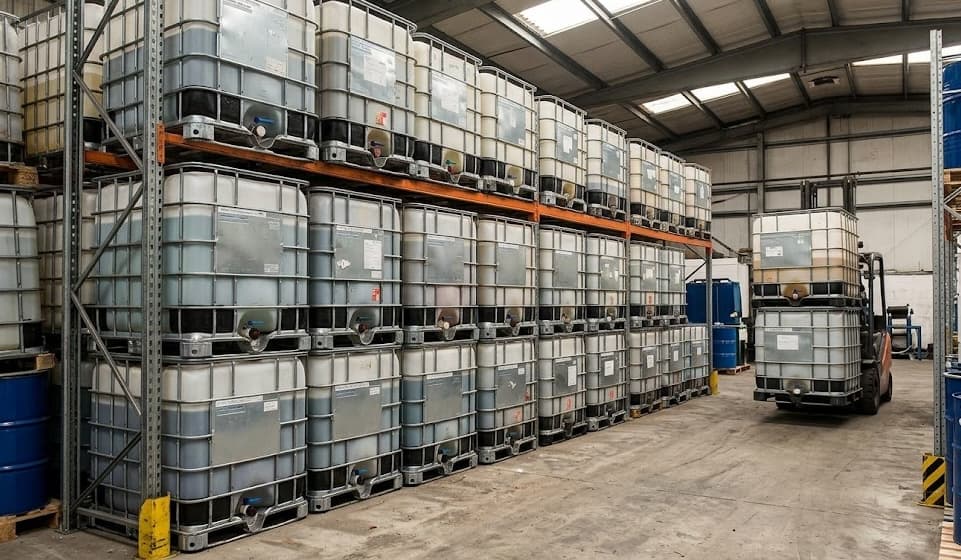
Proper IBC Tote Storage
Proper storage extends the lifespan of your IBC totes, ensures product integrity, and keeps your operation compliant with safety regulations. Storage requirements differ based on whether containers are kept indoors or outdoors, and seasonal conditions in the Chicago area present specific challenges.
Indoor Storage
- •Store on flat, level, clean surfaces capable of supporting the full loaded weight (up to 2,900+ lbs per tote).
- •Maintain ambient temperature between 40 F and 100 F for optimal HDPE performance.
- •Ensure adequate ventilation, especially when storing flammable or volatile materials.
- •Maintain fire code clearances (typically 18 inches from ceiling for sprinkler effectiveness, per NFPA).
- •Stack no more than two high when full, with pallets perfectly aligned and corners matching.
- •Keep IBCs away from heating equipment, steam lines, and radiant heat sources.
- •Provide secondary containment (spill berms or containment pallets) for hazardous materials per EPA requirements.
- •Label each IBC clearly with contents, date received, and any hazard warnings.
Outdoor Storage
- •Protect from direct sunlight — UV radiation degrades HDPE, causing brittleness and cracking. Use shade structures, UV-reflective covers, or UV-stabilized bottle variants.
- •Store on paved or compacted surfaces (not bare soil) to prevent settling and tipping.
- •Ensure drainage — do not allow water to pool around IBC bases, which accelerates wood pallet rot and cage corrosion.
- •In winter (especially in the Chicago area), protect water-based contents from freezing, which can expand and crack the HDPE bottle. Move freeze-sensitive IBCs indoors or use insulated blankets.
- •Secure IBCs from wind — empty totes with high surface area can blow over in strong gusts. Strap or chain outdoor empties to a fixed point.
- •Use secondary containment for any hazardous materials stored outdoors, per EPA and state environmental regulations.
- •Inspect outdoor-stored IBCs monthly for UV degradation, cage corrosion, pallet deterioration, and valve condition.
- •Rotate stock (first in, first out) to minimize exposure duration for any individual tote.
Seasonal Considerations (Midwest / Chicago Area)
Winter (Dec - Mar)
Freeze risk is significant. Move water-based IBCs indoors or use heated storage. Check wooden pallets for freeze-thaw cracking. Inspect gaskets for cold-weather hardening and replace if needed.
Spring (Apr - May)
Monitor for moisture damage after snowmelt. Inspect for corrosion that may have developed over winter. Check drainage around outdoor storage areas.
Summer (Jun - Aug)
UV exposure peaks — shade is critical. Monitor product temperatures in outdoor IBCs. Ensure adequate ventilation for volatile products. Keep IBCs off dark-colored surfaces that absorb heat.
Fall (Sep - Nov)
Begin winterization planning. Move freeze-sensitive IBCs indoors before first frost. Perform annual cage inspections and gasket replacements. Top up secondary containment systems before snow season.
10. Forklift Handling Procedures
Safe handling protects your team, your products, and your investment. IBC totes are heavy when full — a 275-gallon IBC loaded with water weighs approximately 2,420 lbs, and denser chemicals can push that well over 3,000 lbs — so proper equipment and techniques are essential. Every person who handles IBCs should receive formal training on these procedures.
Pre-Handling Checks
- Verify that the forklift is rated for the loaded IBC weight (check the forklift capacity plate).
- Use forks that are at least 42 inches long to fully engage the pallet — short forks risk tipping.
- Inspect the IBC pallet for damage, rot (wood), or cracks (plastic) that could cause failure during lifting.
- Confirm the lid is securely closed and the valve is in the closed position with a dust cap installed.
- Check the travel path for obstacles, overhead clearance, slope, and surface condition.
Lifting and Transport
- Approach the IBC squarely — forks should enter the pallet straight, not at an angle.
- Insert forks fully into the pallet until they extend to the opposite side. Partially inserted forks create an unstable load.
- Lift the IBC just high enough to clear the ground (3 to 6 inches) — never travel with a raised load.
- Tilt the mast back slightly to stabilize the load against the fork carriage.
- Move slowly, especially when turning. Liquid loads shift during movement, changing the center of gravity and creating a tipping risk.
- Avoid sudden starts, stops, and turns. Liquid slosh can destabilize the forklift and the IBC.
- When traversing ramps or inclines, travel with the load facing uphill regardless of direction of travel.
- Never lift an IBC by the cage alone — the cage is designed for structural support and stacking, not as a lifting point.
Placement and Stacking
- Set the IBC down on a flat, level, clean surface rated for the loaded weight.
- Lower slowly and smoothly — avoid dropping or slamming the tote into position.
- When stacking, align the upper IBC pallet corners precisely over the lower IBC cage corners. Misalignment concentrates weight on individual cage tubes and can cause buckling.
- Never stack more than two loaded IBCs high. Empty IBCs can be stacked three high maximum.
- Verify the combined weight does not exceed the manufacturer stacking specification (stamped on the UN label plate).
- After placement, withdraw forks slowly and verify the IBC is stable before driving away.
Safety Rules
- !Never attempt to drag, push, roll, or tilt a loaded IBC. Always use a forklift or pallet jack.
- !When dispensing, use the bottom valve rather than tipping the container. Tipping damages the cage, stresses the bottle, and creates severe spill hazards.
- !Wear appropriate PPE based on the stored material — at minimum, safety glasses, steel-toed boots, and chemical-resistant gloves.
- !Have spill containment materials readily available whenever moving IBCs containing liquids.
- !Report any IBC damage (cracks, leaks, cage deformation, pallet failure) immediately — do not move a compromised container without supervisor approval.
11. Five Cleaning Levels
IBC cleaning is not one-size-fits-all. The cleaning method, intensity, and validation requirements depend on the previous contents, the intended next use, and the regulatory framework governing your industry. At IBC Recycling Chicago, we define five cleaning levels, each with escalating procedures, costs, and turnaround times.
Level 1: Basic Rinse
A cold or warm water rinse to remove loose residual product. The interior is flushed with pressurized water (500-1,000 PSI) using a rotating spray head, drained, and allowed to dry. No cleaning agents are used.
Level 2: Detergent Wash
A full cleaning cycle using alkaline detergent (for organic residues) or acid wash (for mineral deposits). The tote is pre-rinsed, the cleaning agent is applied via rotating spray head and allowed to circulate for the recommended contact time, and the interior is then rinsed with clean water until all detergent residue is removed. Visual inspection confirms cleanliness.
Level 3: Food-Grade Sanitization
All Level 2 steps plus a hot water rinse (180 F+), treatment with a food-safe sanitizer (peracetic acid, chlorine dioxide, or quaternary ammonium), a final rinse with potable water, and laboratory testing of rinse water to verify no chemical or microbial contamination remains. The tote is dried in a clean environment.
Level 4: Solvent / Chemical Decontamination
Multi-stage cleaning using solvents, specialized chemicals, or steam to remove aggressive chemical residues that detergent alone cannot address. May include multiple wash-rinse cycles with different agents, extended contact times, and elevated temperatures. Post-cleaning testing (pH, conductivity, or chemical-specific analysis) validates complete decontamination.
Level 5: Hazmat Decontamination
Professional-grade decontamination following EPA and DOT protocols for IBCs that have contained RCRA-listed hazardous waste, toxic chemicals, or other regulated substances. Performed by certified personnel with specialized equipment. May involve full bottle replacement (rebottling) if decontamination is not feasible or cost-effective. Complete documentation package including waste manifests and decontamination certificates.
Need professional cleaning? IBC Recycling Chicago offers all five cleaning levels at our Elk Grove Village facility. We handle everything from basic rinse to full hazmat decontamination. Learn more about our cleaning services or contact us for a quote.
12. Lifespan by Component
The lifespan of an IBC tote depends on its type, materials, storage conditions, the products it carries, and how well it is maintained. Understanding lifespan by component helps you make smart decisions about reconditioning versus replacement.
Lifespan Summary
The key factor in IBC longevity is reconditioning. A composite IBC cage can be rebottled (fitted with a brand-new HDPE bottle) 3 to 4 times over its service life, effectively giving the cage a 15 to 20 year working life. This is why IBC recycling is both economically and environmentally compelling — the most expensive component (the cage, which requires the most energy to manufacture from raw steel) lasts far longer than the bottle, and each rebottling saves approximately 80% of the materials and 70% of the energy compared to manufacturing an entirely new IBC.
13. Buying Guide
Choosing the right IBC tote for your application involves evaluating several factors. Here is a step-by-step framework to guide your purchasing decision.
Step 1: Define Your Application
What product will you store? Is it food-grade, industrial chemical, agricultural, or non-critical (rain barrel, garden)? This determines the required grade, material, and certifications.
Step 2: Check Chemical Compatibility
Verify that your product is compatible with HDPE at the relevant concentration and temperature. Refer to our chemical compatibility table (Section 8). If HDPE is not suitable, consider fluorinated bottles or stainless steel IBCs.
Step 3: Choose the Right Size
Match the IBC capacity to your batch size. The 275-gallon is the industry standard. The 330-gallon offers 20% more capacity in the same footprint. Consider your ceiling height, racking limits, and truck loading plans.
Step 4: Select the Grade
Grade A for food-grade, pharmaceutical, and sensitive applications. Grade B for standard industrial and agricultural use. Grade C for non-critical storage, rain barrels, and garden projects. Reconditioned for a new-bottle IBC at used-tote pricing.
Step 5: Verify Previous Contents
For food-grade applications, ensure the tote has an unbroken food-grade chain of custody. For chemical use, confirm the previous contents are compatible with your product. For non-critical use, previous contents matter less but should still be considered.
Step 6: Inspect Before You Buy
Check the bottle for clarity (cloudy = UV degradation), cracks, bulges, or odor. Check the cage for dents, corrosion, and broken welds. Check the valve for smooth operation and leak-free seal. Check the pallet for structural integrity. Check the UN date stamp for age.
Step 7: Calculate Total Cost
Factor in the tote price, delivery cost, any cleaning required, valve or gasket replacements, and the expected number of use cycles. A reconditioned IBC at $200 that lasts 5 years may be more cost-effective than a $50 Grade C tote that needs replacing after one year.
14. Selling Guide
If your business has surplus, used, or end-of-life IBC totes, selling them is almost always better than disposing of them — you receive payment for materials that still have value, you divert waste from landfills, and you may receive environmental compliance documentation. Here is how to maximize the value of your used IBCs.
What Increases Value
- •Recent manufacture date (less than 3 years old)
- •Clean interior with clear bottle
- •Food-grade previous contents
- •Intact labels and UN markings
- •Functional valve with no leaks
- •Straight cage with no major dents
- •Intact pallet (plastic preferred over wood)
- •Large quantities (volume = better per-unit price)
What Decreases Value (But Is Still Accepted)
- •Old manufacture date (5+ years)
- •Heavy staining, discoloration, or odor
- •Non-food chemical previous contents
- •Missing or damaged labels
- •Broken or leaking valve
- •Significant cage dents or broken welds
- •Rotted or cracked pallet
- •Small quantities (1-5 units)
The process is simple: Contact us with photos, quantities, and your location. We provide a per-unit quote within 24 hours. Once accepted, we schedule pickup (free for 20+ units within the Chicagoland area), load the totes, and pay you on the spot or within 5 business days. We handle all transportation logistics — you do not need to deliver anything to us.
15. Regulatory Overview
IBC totes are subject to multiple layers of regulation depending on their contents, application, and transport mode. Here is a summary of the key regulatory frameworks that IBC users and operators should be aware of.
The UN Recommendations on the Transport of Dangerous Goods establish the design, performance testing (drop test, leakproofness, hydraulic pressure, stacking), and marking requirements for IBCs worldwide. All IBCs intended for hazmat use must carry a valid UN marking.
DOT regulations govern how IBCs are transported on U.S. roads, railways, and waterways. Key requirements include UN-certified containers within their service life, proper securement, placarding, shipping papers, driver HazMat endorsement, and emergency response information.
The FDA regulates materials that come into contact with food products. HDPE used in food-grade IBC bottles must be manufactured from approved resins with migration levels below established thresholds. The tote must maintain food-grade chain of custody throughout its life.
The EPA regulates IBCs that have held hazardous waste under RCRA. Containers must be properly emptied (triple-rinsed or pressure-rinsed) before they can be classified as "empty." Improper disposal of hazardous waste containers can result in significant fines and cleanup liability.
OSHA regulations cover safe handling, storage, and use of IBCs in the workplace, including requirements for hazard communication (GHS labels and SDS), personal protective equipment, forklift operator training, and emergency response planning.
NFPA 30 (Flammable and Combustible Liquids Code) governs storage arrangements, quantities, ventilation, and fire suppression requirements for IBCs containing flammable or combustible liquids. Local fire marshals enforce these codes.
Compliance note: This guide provides a general overview of applicable regulations and is not a substitute for professional legal or regulatory advice. Regulations change, and requirements vary by jurisdiction, product type, and application. Consult with a compliance professional or contact the relevant agency directly for guidance specific to your situation. IBC Recycling Chicago can help connect you with the right resources.
16. Glossary of IBC Terms
The IBC industry uses specialized terminology that can be confusing for newcomers. Here is a comprehensive glossary of the most important terms.
IBC
Intermediate Bulk Container — a reusable industrial container for bulk liquids and granulated materials, typically 275 to 330 gallons capacity.
Tote
Common informal name for an IBC, used interchangeably with "IBC tote" or "IBC tank" in the industry.
Composite IBC
An IBC with an HDPE inner bottle housed inside a steel cage on a pallet base. The most common IBC type (UN 31HA1).
HDPE
High-Density Polyethylene — the thermoplastic material used for most IBC bottles. Chemically resistant, food-safe, and recyclable.
Rebottling
The process of removing a used HDPE bottle from a cage and installing a brand-new bottle. Also called reconditioning or refurbishing.
Reconditioning
Full refurbishment of a used IBC: new bottle, new valve, new gaskets, cage repair/repaint, and a fresh UN date stamp.
UN Rating
The standardized marking on an IBC indicating its type, packing group, manufacture date, and country of origin.
Packing Group
UN classification (I, II, or III) indicating the danger level of materials the IBC is certified to carry. Lower number = higher danger.
Butterfly Valve
A 2-inch discharge valve using a rotating disc to control flow. Standard on most composite IBCs. Quick-acting and cost-effective.
Ball Valve
A 2-inch discharge valve using a rotating ball with a bore hole. Provides full-bore flow and tighter seal than butterfly valves.
Food Grade
An IBC with an FDA-compliant HDPE bottle that has only ever held food-safe products and has been properly cleaned between uses.
Grade A / B / C
Quality classifications for used IBCs based on cosmetic condition, bottle clarity, cage condition, and overall wear level.
Cage
The galvanized tubular steel framework surrounding the HDPE bottle in a composite IBC. Provides structural support and stackability.
Galvanizing
The process of coating steel with zinc to prevent corrosion. Standard treatment for IBC cage tubes.
NPS
National Pipe Standard — the thread specification for IBC valves. Standard size is 2-inch NPS.
S60x6
A coarse-thread standard used on many European-manufactured IBC valves. 60mm diameter with 6mm thread pitch.
EPDM
Ethylene Propylene Diene Monomer — a general-purpose gasket material suitable for water, alcohols, and mild chemicals.
Viton / FKM
Fluoroelastomer gasket material with excellent resistance to chemicals, fuels, and high temperatures. Premium option.
PTFE
Polytetrafluoroethylene (Teflon) — an ultra-chemical-resistant gasket material for the most demanding applications.
Fluorination
A barrier treatment applied to HDPE bottles to reduce permeation of solvents, fuels, and aromatic chemicals through the plastic wall.
RCRA
Resource Conservation and Recovery Act — EPA law governing hazardous waste management, including container handling and disposal.
49 CFR
Title 49 of the Code of Federal Regulations — DOT regulations governing transportation of hazardous materials in the United States.
ISPM-15
International Standards for Phytosanitary Measures No. 15 — the standard for heat-treating wood packaging for international shipping.
CIP
Clean-in-Place — an automated cleaning method used primarily with stainless steel IBCs, where cleaning solution circulates without disassembly.
Spill Containment
Secondary containment systems (berms, pallets, dikes) required by EPA for hazardous material storage to prevent environmental release.
Specific Gravity
The density of a liquid relative to water (water = 1.0). Used to calculate the weight of a filled IBC and verify equipment capacity ratings.
Migration
The transfer of chemical substances from packaging material into the stored product. Critical concern for food-grade IBCs (regulated by FDA).
Need IBC Totes for Your Business?
Whether you need to buy, sell, recycle, clean, or get expert advice, our team is ready to help. Contact IBC Recycling Chicago today.