Repurposed IBC Totes
Not every IBC tote goes back into industrial service. Here are second-life uses for retired totes. Partner suppliers may be able to help with a suitable tote; availability varies.
Get a Free Quote
Free, no-obligation quote request
Repurposed IBC Totes
Giving a Retired Tote Another Job
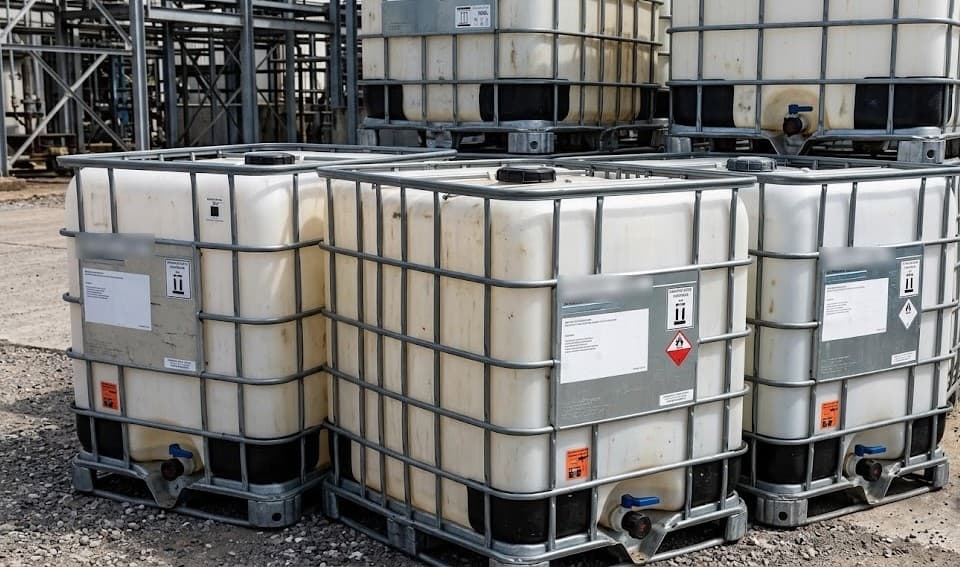
An IBC tote is an HDPE bottle in a galvanized steel cage on a pallet. When a tote is no longer suitable for its original job, the parts may still be useful for something less demanding.
Reusing a tote avoids building a new container for the same job, and the parts can often still go to a recycler later. Recycling is also a good outcome, especially for a tote that held something you would not want near a garden.
These are general ideas for do-it-yourself projects. We do not build or sell these items. Partner suppliers may be able to help with a suitable tote or parts, and availability varies.
What Can Be Reused
14 Uses for Retired IBC Totes
Partner suppliers may be able to help with a tote or parts for these uses; availability varies. Read the safety guide further down the page before you start.
Rain Barrel
EasyA cleaned tote can collect rainwater from a downspout for garden use. The usual approach is a screened inlet at the top to keep out debris and mosquitoes, with the bottom valve or a hose spigot for drawing water. Covering the bottle blocks light and helps limit algae. Set the tote on a level, solid base, because a full one is heavy.
Materials List
- Clean IBC tote with known prior contents
- Mesh screen
- Hose adapter
- Opaque cover or shade cloth
- Downspout diverter
Worth Knowing
Use collected rainwater for non-potable purposes unless you have checked treatment and local rules. Know what the tote held first.
Raised Garden Bed
EasyCutting down the bottle and cage gives an open-top planter at a comfortable working height. Holes along the bottom provide drainage, and landscape fabric holds the soil in. The steel cage acts as a frame that does not rot like a wood bed.
Materials List
- IBC tote with known prior contents
- Landscape fabric
- Drainage gravel
- Garden soil and compost
- Angle grinder
- Cable ties
Worth Knowing
If you plan to grow food, avoid totes that held chemicals. Ask what the tote held and make your own judgment.
Composting System
ModerateA tote can be cut with a side access door and ventilation holes to hold yard waste and kitchen scraps. A raised false floor separates the material from any liquid that collects below, and the bottom valve lets that liquid drain. Airflow and moisture matter more than the container, so plan to turn the pile.
Materials List
- IBC tote
- Perforated false floor
- Drill bits
- Hinges and latch
- Mesh for vent holes
- Compost thermometer
Worth Knowing
Check local rules on composting, particularly for food scraps, and keep the system closed to rodents.
Aquaponics Tank
AdvancedIBC totes are a popular base for small aquaponics systems. A typical build uses the lower part of the bottle as a fish tank and the cut-off top, inverted, as a grow bed. A pump moves water up, and a siphon returns it. It takes some plumbing, and regular attention to water quality.
Materials List
- IBC tote with known prior contents
- Submersible pump
- Grow media
- Bell siphon
- PVC fittings
- Water test kit
Worth Knowing
Prior contents matter for fish and for anything you plan to eat. Ask the supplier for documentation, and confirm with current regulations if you sell produce or fish.
Emergency Water Storage
EasyA tote can hold a large reserve of water for emergencies, in a garage or outbuilding with a floor that can take the weight. If the water is for drinking, the container is only part of the question. Treatment, rotation, and how the tote was used before all matter.
Materials List
- IBC tote with documented prior contents
- Vented lid cap
- Spigot adapter
- Water test strips
Worth Knowing
For potable water, ask the supplier for documentation and confirm with your own QA and current regulations. Follow current public health guidance on treating and storing water.
Dog Wash Station
ModerateWith a door cut into one side, a tote can become a contained bathing area for a dog. A non-slip mat on the floor and a drain fitting to a hose or pipe keep it practical. The bottle contains splashes, and the cage keeps the unit stable. Smooth any cut edges fully.
Materials List
- IBC tote with known prior contents
- Non-slip rubber mat
- Drain fitting
- Hose connector
- Hinges and latch
Worth Knowing
Avoid totes that held chemicals. Check where the wash water drains.
Outdoor Shower
ModerateA cage can frame a simple outdoor shower enclosure, with the bottle cut down or replaced by panels. Plumbing usually comes from a garden hose, with a drain routed away from the structure. The steel frame supports a curtain rail or door panel for privacy.
Materials List
- IBC tote
- Shower head and plumbing
- Drain fitting
- Curtain or door panel
- Curtain rail
Worth Knowing
Check local codes on plumbing and drainage, and use a tote with known prior contents if the bottle stays in place.
Fish Pond / Water Feature
ModerateWith the top cut off, a tote can become a small above-ground pond. A recirculating pump adds movement, and the cage can be clad in stone or wood for a more natural look. Covering the sides helps block sunlight, which limits algae and protects the bottle.
Materials List
- IBC tote with known prior contents
- Recirculating pump
- Filter media
- Stone or wood cladding
- Aquatic plants
Worth Knowing
In a Chicago winter, shallow water freezes solid. Plan to bring fish indoors or use a deeper, protected setup.
Chicken Coop / Small Animal Shelter
AdvancedA tote can be converted into a small shelter with doors, perches, and nesting space. Ventilation openings covered in hardware cloth let air in and keep predators out. The bottle can be hosed clean, and the pallet lifts the floor off the ground.
Materials List
- IBC tote with known prior contents
- Hardware cloth
- Perch bars
- Nesting boxes
- Hinges and latches
- Roofing for rain protection
Worth Knowing
Ventilation matters, as does winter cold. Check local rules, since many Chicagoland suburbs regulate backyard chickens.
Firewood Storage Rack
EasyWith the bottle removed, the steel cage makes a simple firewood rack. The open grid lets air move around the stack, which helps wood dry. A sheet of corrugated roofing on top keeps off rain and snow while leaving the sides open.
Materials List
- IBC cage and pallet
- Corrugated roof panel
- Self-tapping screws
Worth Knowing
Keep stacked wood a safe distance from the house, and watch for sharp edges where the cage was cut.
Greenhouse / Cold Frame
ModerateA cage can support clear plastic or polycarbonate panels to make a small cold frame. Cut down to half height with a hinged lid, it protects seedlings and cold-hardy greens in spring and fall. Vent it on sunny days so it does not overheat.
Materials List
- IBC cage and pallet
- Greenhouse plastic or polycarbonate
- Hinges
- Clamps or zip ties
Worth Knowing
Check that the frame is anchored or weighted. A light structure can catch the wind.
Vermicomposting System
ModerateA tote can hold a large worm bin, with a perforated floor over a collection area and the bottom valve for draining liquid. Worms need bedding, moisture, and moderate temperatures, so a sheltered location works well.
Materials List
- IBC tote
- Perforated partition
- Coconut coir bedding
- Red wiggler worms
- Mesh screens
- Moisture meter
Worth Knowing
Bring the system into a protected space in winter, since worms do not survive freezing.
Portable Mixing / Batch Tank
AdvancedA tote can serve as a simple mixing vessel with a top-entry mixer through the fill opening and volume marks on the side of the bottle. A ball valve gives easier flow control when dispensing. Forklift access makes it movable between work areas.
Materials List
- IBC tote
- Top-entry mixer
- Volume markings
- Ball valve
Worth Knowing
Check the SDS and supplier for your product, and every wetted part, before mixing chemicals.
Rainwater Harvesting System
AdvancedSeveral totes can be connected to store more rainwater for irrigation or other non-potable uses. A typical setup includes a first-flush diverter to discard the dirtiest runoff, a sediment filter, isolation valves between totes, and possibly a pump. Connect them low on the tote so the level equalizes.
Materials List
- Two or more IBC totes
- Manifold pipe and fittings
- Isolation valves
- First-flush diverter
- Sediment filter
- Pump (optional)
Worth Knowing
Roofs in the Chicago area collect a surprising amount of water, so plan an overflow route. Drain lines and valves before a freeze.
Community Project Ideas
Repurposed totes can suit shared spaces as well as backyards. These are starting points for groups in the Chicagoland area thinking about a project.
School Gardens
A raised bed and a rain barrel can make a hands-on outdoor lesson in biology and nutrition. For anything around children, choose totes with known prior contents, smooth all cut edges, and have the school check its own rules.
Community Gardens
Raised beds can sit on hard surfaces such as vacant lots where in-ground gardening is not practical. They need no digging and can be moved if the site changes. Check with the property owner and the local rules first.
Urban Farms
Small urban growers use totes for rainwater, composting, and aquaponics in limited space. Food safety rules apply if you sell what you grow, so check current regulations and know what each tote held.
Food Pantry and Church Gardens
A rain barrel can water a garden that supplies a pantry, and a composting system can handle garden waste. Start small, and assign someone to maintain the setup through the season.
Repurposing Safety Guide
Repurposing an IBC tote is practical, but it takes care with materials, structural limits, and local rules. Keep these points in mind for every project.
Know Your Prior Contents
Do not repurpose a tote without knowing what it held. Residues of chemicals or pesticides can be dangerous, especially around gardens, animals, and water. Ask the supplier for documentation of prior contents.
Food and Potable Water
If your project involves food or potable water, ask the supplier for documentation and confirm with your own QA and current regulations.
UV Protection
HDPE degrades in direct sunlight. A tote used outdoors should be covered, painted with a suitable coating, or wrapped in shade cloth. A sun-damaged bottle can become brittle and fail, releasing a lot of water at once.
Structural Integrity
Before repurposing, inspect the bottle for cracks, the cage for broken welds, and the pallet for rot or damage. A compromised cage may not be able to hold a full bottle. Cutting the cage also weakens it, so never fill a cut tote to its original level.
Water Treatment
Stored water can grow bacteria and algae and attract mosquitoes. Screen every opening. For stored drinking water, follow current public health guidance on treatment and rotation.
Cutting and Fabrication Safety
Cutting HDPE and galvanized steel leaves sharp edges and produces sparks. Wear eye and hearing protection and heavy gloves. Grinding or welding galvanized steel produces zinc fumes, so work in a well-ventilated area with suitable respiratory protection. Deburr all cut edges.
Weight and Placement
Water weighs about 8.34 lbs per gallon, so 275 gallons alone weigh about 2,300 lbs. Place a tote on a level surface that can carry the load, such as a concrete pad or compacted gravel. Do not put a full tote on a residential deck without checking with a structural engineer.
Local Codes and Regulations
Check local building codes, HOA rules, and zoning before you install anything. Municipalities in the Chicago area differ on rainwater collection, outdoor structures, composting, and backyard animals.
Other Project Ideas
The uses above are not the only possibilities. People also reuse totes as livestock watering troughs, hand-wash stands, and hydroponic systems. If you have a project in mind, describe it in your request. A partner supplier may be able to help with a suitable tote; availability varies.
Building It Yourself
Economy-grade totes are often used for these projects. If your project only needs part of a tote, such as a cage and pallet, say so, because some suppliers may have parts available. Tell them what the project is, so that prior contents can be discussed.
How to Ask About a Repurposing Project
Describe Your Project
Use the form to tell us the use you have in mind, the size, the quantity, and your town or county in the Chicagoland area.
We Pass It Along
We send your request to partner suppliers. The request is free and carries no obligation.
A Partner Supplier Follows Up
A partner supplier follows up if they may be able to help. Availability varies, and pricing is by quote.
Confirm the Details
Ask what the tote held and agree pickup or delivery directly with the supplier before you buy.
Project Difficulty Guide
If you are planning a DIY repurposing project, use this guide to see what each difficulty level means for tools and skills.
Tools Required
Basic hand tools (drill, screwdriver, wrench), garden hose, sealant
Skills Needed
No specialized skills required. Basic DIY experience helps.
Projects at This Level
Rain Barrel, Raised Garden Bed, Emergency Water Storage, Firewood Rack
Tools Required
Angle grinder with cut-off wheel, drill with hole saw bits, jigsaw, plumbing fittings
Skills Needed
Comfort with power tools. Basic plumbing and fabrication skills.
Projects at This Level
Composting System, Dog Wash Station, Outdoor Shower, Fish Pond, Greenhouse, Vermicompost
Tools Required
Precision plumbing tools, electrical tools, pump installation tools, and possibly welding equipment
Skills Needed
Plumbing, electrical, or welding skills, or someone qualified to help.
Projects at This Level
Aquaponics Tank, Chicken Coop, Mixing Tank, Rainwater Harvesting System
Give an Old Tote a New Purpose
Planning a rain barrel, a garden bed, or something else? Tell us what you have in mind. A partner supplier may be able to help with a suitable tote; availability varies.