IBC Tote Products
275 and 330 gallon IBC totes in a range of condition grades, plus accessories and ideas for repurposing. Products are available through partner suppliers; ask for a quote.
Get a Free Quote
Free, no-obligation quote request
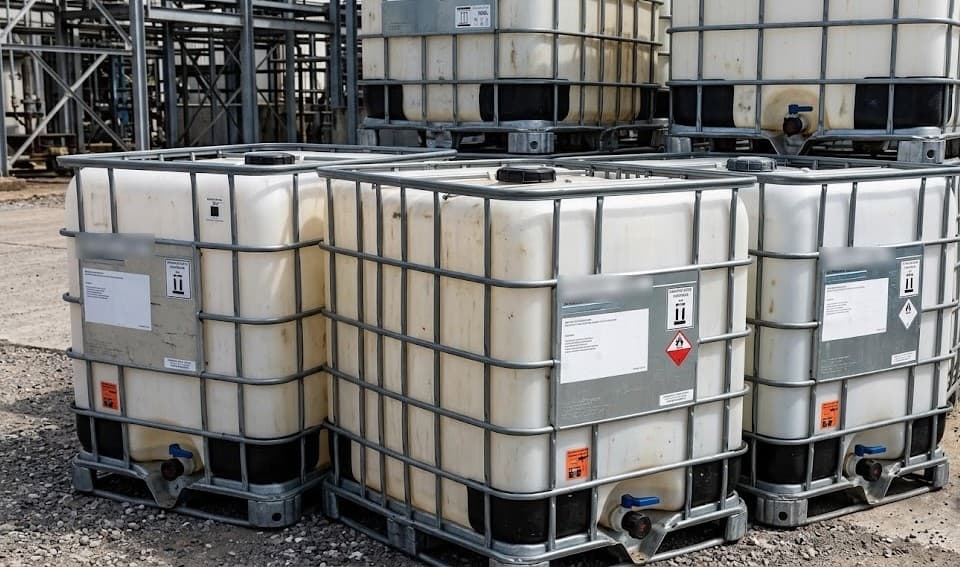
IBC Totes Through Partner Suppliers
Browse the Product Categories
We take requests from Chicago and the Chicagoland area and pass them to partner suppliers. Pricing is by quote, and availability depends on the supplier.
275 Gallon IBC Totes
The most common IBC size, used for chemicals, water, agriculture, and general industrial liquids. About 40" x 48" x 46" including the pallet. Available through partner suppliers; ask for a quote.
- About 1,040 liter capacity
- About 40" x 48" footprint
- About 46" overall height
- HDPE bottle in a galvanized steel cage
- Bottom valve, often 2"
- Sold in a range of condition grades
330 Gallon IBC Totes
55 more gallons on the same footprint. Useful when floor space is tight and overhead clearance is not. About 40" x 48" x 53" including the pallet. Available through partner suppliers; ask for a quote.
- About 1,250 liter capacity
- About 40" x 48" footprint
- About 53" overall height
- HDPE bottle in a galvanized steel cage
- Bottom valve, often 2"
- Check rack and door clearance first
Rebottled IBC Totes
A new HDPE bottle fitted into a used steel cage. Buyers choose them when they want a bottle with no prior contents but do not need an all-new container.
- New inner bottle
- Used cage and pallet
- No prior contents in the bottle
- Offered in 275 and 330 gal sizes
- Availability depends on the supplier
- Ask for the bottle date and test status
Reconditioned IBC Totes
Used totes that have been washed, inspected, and repaired for another use. Reconditioning typically involves cleaning the bottle, replacing worn valves or gaskets, and repairing the cage or pallet.
- Cleaned and inspected
- Valve and gaskets checked or replaced
- Cage checked for damage
- Pallet repaired or replaced
- Offered in 275 and 330 gal sizes
- Scope of work varies by supplier
IBC Accessories & Parts
Valves, adapters, lids, gaskets, heating blankets, spill pallets, and mixers. Partner suppliers may be able to source the parts you need to outfit or maintain a tote.
- Butterfly and ball valves
- Camlock adapters
- Heating blankets and covers
- Spill containment pallets
- Mixers
- Hoses and fittings
Repurposed IBC Uses
Second-life uses for retired totes, such as rain barrels, raised garden beds, and composting. Partner suppliers may be able to help with a suitable tote; availability varies.
- Rain barrels
- Raised garden beds
- Composting systems
- Aquaponics tanks
- Firewood racks
- Greenhouses and cold frames
IBC Tote Types Explained
Suppliers use a few common terms for used totes. Understanding them makes it easier to ask for the right thing.
Rebottled IBC Totes
A new HDPE bottle installed inside an existing galvanized steel cage, usually on a used or repaired pallet. Because the bottle has not held any product, rebottled totes avoid the question of prior contents. Ask the supplier when the bottle was made and what testing was done after assembly.
Reconditioned IBC Totes
Used totes restored to working condition. Reconditioning typically involves washing the bottle, rebuilding or replacing the valve, straightening or repairing the cage, repairing or swapping the pallet, and a leak check with a visual inspection. What is included differs between suppliers, so ask what was done to the tote you are quoted.
Industrial-Use IBC Totes
Used totes bought for non-food liquids, where condition and compatibility matter more than appearance. Sold across condition grades. Prior contents matter here too: check the SDS for your product and tell the supplier what you plan to store.
Food and Potable Water Use
If your product is food or potable water, ask the supplier for documentation and confirm with your own QA and current regulations before you buy.
Understanding IBC Tote Grades
There is no single industry grading standard. Grades A, B, and C are general descriptions of condition, and each supplier applies them a little differently. Use them as a starting point and ask what a grade means for the totes you are quoted.
- One-trip or lightly used containers
- Little or no staining or denting
- Legible labels and marking plate
- Bottle and cage in very good condition
- Valve operates smoothly
- Usually the highest grade a supplier sells
Typical uses: Applications where appearance and cleanliness matter most. Confirm suitability with the supplier.
- Used, with light cosmetic wear
- Minor scuffing or label residue on the bottle
- Cage may show slight surface oxidation
- Working valve assembly
- No cracks in the bottle
- May show minor discoloration from prior contents
Typical uses: General industrial use where light cosmetic wear does not matter, after checking compatibility.
- Multiple-use containers with visible wear
- May have staining, scuffing, or label adhesive
- Cage may show bends or rust spots
- Valve may need replacement
- Should still be free of cracks and leaks
- Often chosen for repurposing projects
Typical uses: Non-sensitive storage, rainwater collection, waste collection, and repurposing projects.
Grade vs. Industry Application Guide
Use this table as a rough starting point. The right choice depends on your product, its SDS, and what the tote held before. Confirm suitability with the supplier.
| Industry / Application | Rebottled | Grade A | Grade B | Grade C |
|---|---|---|---|---|
| Food, Beverage, and Potable Water | Confirm with QA | Confirm with QA | Confirm with QA | Confirm with QA |
| Chemical Storage | Check SDS | Check SDS | Check SDS | Check SDS |
| Agriculture | Usually not needed | Often more than needed | Common choice | Common choice |
| Manufacturing & Industrial | Usually not needed | Works well | Common choice | Depends on use |
| Waste Collection & Recycling | Usually not needed | Usually not needed | Works well | Common choice |
| Cleaning & Janitorial Supply | Usually not needed | Works well | Common choice | Depends on use |
| Automotive (Coolant/Fluids) | Usually not needed | Works well | Common choice | Depends on use |
| Rainwater Harvesting / DIY | Usually not needed | Usually not needed | Works well | Common choice |
What Determines IBC Tote Pricing?
Pricing is by quote from partner suppliers, and it changes with supply. These are the details that shape a quote, so including them in your request helps a supplier respond accurately.
Container Size
Tell the supplier whether you need 275 or 330 gallon totes, or whether either would work. Being flexible on size can widen what is available at the time you ask.
Condition Grade
Grades describe wear and appearance. Name the lowest grade that works for your use, because a higher grade costs more without always adding anything you need.
Tote Type
Rebottled, reconditioned, and as-is used totes involve different amounts of work and parts, so quotes differ. Say which types you would accept.
Order Quantity
Include the number of totes and whether the need is one-time or repeating. Supplier stock changes, so larger requests may take more arranging.
Previous Contents
Prior contents affect what a tote is suitable for. If your product is sensitive to contamination, say so up front and ask what the tote held before.
Pallet and Location
Pallet type and where in Chicagoland the totes are going both affect a quote. Include your site details and whether you can unload with a forklift.
What an IBC Tote Inspection Typically Covers
Suppliers have their own inspection routines, but most look at the same things. You can use this list to ask about a tote before you buy, or to check one when it arrives.
Bottle Crack Check
Inspectors look over the HDPE bottle for cracks, stress marks, and impact damage, paying attention to the corners and the area around the valve. A cracked bottle is normally rejected or replaced.
UV Damage Check
Sunlight makes HDPE brittle over time. Yellowing, chalkiness, and reduced flexibility are warning signs, especially on totes that sat outdoors.
Valve Function
The valve is opened and closed and watched for drips at the seat, the shaft, and the connection to the bottle. Leaking valves are usually replaced.
Thread Condition
Threads at the top fill opening and the bottom outlet are checked for stripping and cross-threading, since a damaged thread will not seal reliably.
Cage Welds
The galvanized steel cage restrains the bottle when it is full. Welds and joints are checked for cracks, breaks, and corrosion.
Cage Shape
Dented or twisted cages are assessed for severity. Minor cosmetic dents may be acceptable, while damage that presses on the bottle or prevents clean stacking usually is not.
Pallet Soundness
The pallet has to carry the tote when it is full. Inspectors look at the runners, deck, and fasteners for splits, rot, and damage.
Fork Entry Points
Fork openings are checked for damage that could cause a problem during lifting, and to confirm a pallet jack or forklift can still enter cleanly.
Interior Residue
With the fill cap off, the inside of the bottle is checked for residue, scale, or sediment. Totes that cannot be cleaned are typically downgraded or recycled.
Odor Check
HDPE can hold odors from some products, such as solvents and fragrances. A strong lingering odor is a reason to downgrade a tote.
Labels and Markings
Existing labels, UN markings, and manufacturer plates are reviewed to identify the maker, prior contents, and test dates. Old product labels are normally removed.
Leak Test
A leak test checks the valve, lid, and bottle for leaks. Methods vary between suppliers, so ask how a tote was tested if it matters for your use.
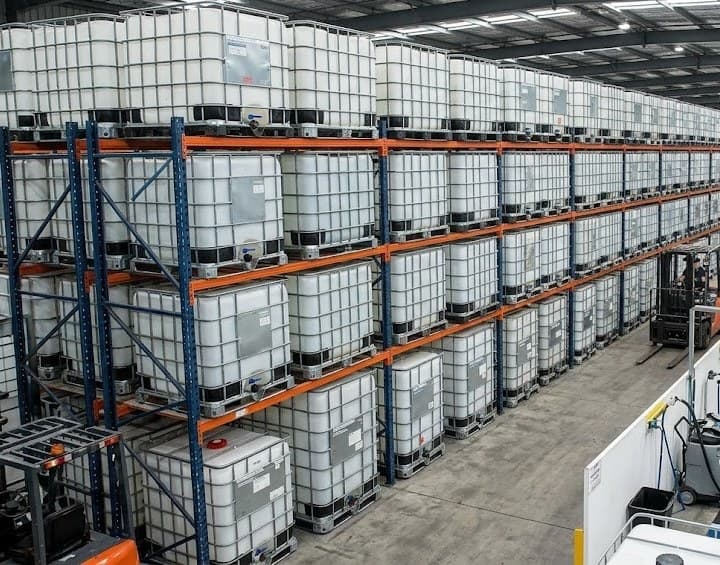
What Happens to Totes That Fail?
A tote with a cracked bottle, broken welds, or a contamination problem generally does not go back into service as is. It may be rebottled if the cage is still good. Otherwise the parts are typically separated: the HDPE bottle can go to a plastics recycler, the steel cage to a metal recycler, and the pallet can be repaired or recycled. What is possible depends on what the tote held.
What Makes Up a Complete IBC Tote
A standard caged IBC is an HDPE inner bottle in a galvanized steel cage on a pallet. Here is what to check is present and in working order on any tote you are quoted.
Bottom Discharge Valve
A valve at the bottom outlet, often 2 inches, usually a butterfly or ball type. On a used tote it may be the original or a replacement. Gasket material matters for compatibility, so check it against your product.
Top Fill Cap
A screw-on cap over the top opening, commonly about 6 inches. Caps come solid or vented. Vented caps are used for products that off-gas, and to let air in during draining.
Pallet Base
Totes sit on a wood, steel, or plastic pallet with a footprint of about 40 by 48 inches, and fork access for forklifts and pallet jacks. Pallet type varies between totes and suppliers.
Galvanized Steel Cage
The cage surrounds and restrains the HDPE bottle and protects it during handling. Condition varies with grade, from clean and straight to dented or rusted in spots.
Marking Plate
Most totes carry a plate or label with the UN marking and the 2.5- and 5-year test dates. Older totes may have faded or missing plates. If you need a current marking, ask the supplier before you buy.
Need Help Choosing the Right IBC Tote?
Tell us the size, grade, quantity, and what you plan to store. We pass your request to partner suppliers, and a partner supplier follows up. Availability depends on the supplier.