Cleaning & Reconditioning
Professional IBC tote cleaning and reconditioning that restores containers to like-new condition. Our UN/DOT-certified process ensures every tote meets the highest quality and safety standards for food-grade and industrial applications.
Get a Free Quote
We respond within 24 hours
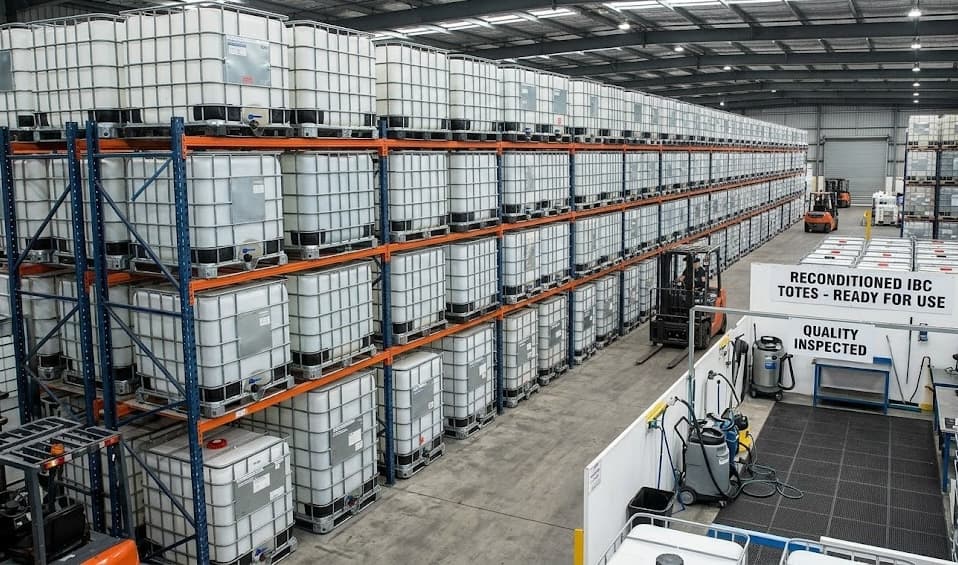
Professional Reconditioning
Five Cleaning Levels From Basic Rinse to FDA Food-Grade
Not every IBC tote needs the same level of cleaning. We offer five distinct cleaning levels, each designed for a specific use case, so you pay only for what you need. Choose the level that matches your application and regulatory requirements.
Level 1: Basic Rinse
$1-2 hours per toteA basic water rinse that removes loose residual liquid and debris from the IBC tote interior. This is the entry-level cleaning for totes that previously contained non-staining, water-soluble products such as clean water, simple syrup, or dilute soap solutions.
Process Details
The bottle interior is flushed with clean water at ambient temperature using a rotary spray head inserted through the top opening. Water circulates for approximately 5 minutes, drains through the discharge valve, and is captured for wastewater treatment. A visual inspection confirms residue removal.
Non-critical industrial reuse, rainwater collection, and non-food liquid storage where prior contents were water-soluble and non-hazardous.
Level 2: High-Pressure Wash
$$2-3 hours per toteA thorough cleaning using high-pressure water jets at 2,500 to 3,000 PSI that removes stubborn residue, labels, adhesive, light staining, and biofilm from both the interior and exterior surfaces of the HDPE bottle. The steel cage and pallet are also pressure-washed and degreased.
Process Details
Following an initial drain of residual contents, a high-pressure rotary nozzle is inserted through the top opening and operated for 10-15 minutes. The exterior bottle surface, cage, and pallet are pressure-washed separately. Labels and adhesive are removed with targeted high-pressure application. The tote is drained, inspected, and air-dried.
General industrial reconditioning, agricultural chemical storage, automotive fluid storage, and totes requiring cosmetic restoration for resale.
Level 3: Chemical Wash
$$$3-4 hours per toteA chemical cleaning protocol that uses specialized cleaning agents to dissolve and remove chemical residue, heavy staining, mineral deposits, and organic contamination that water alone cannot address. The cleaning chemistry is matched to the specific prior contents for maximum effectiveness.
Process Details
The tote is first drained and pre-rinsed. A cleaning agent solution is introduced (typically alkaline detergent for organic residue or acidic cleaner for mineral deposits), heated to 140-160 degrees Fahrenheit, and circulated through the bottle interior for 20-30 minutes using a recirculating pump. This is followed by a triple-rinse with clean water to remove all cleaning agent residue. The bottle is inspected for residual staining and odor.
Totes that previously contained resins, adhesives, paints, inks, concentrated chemicals, or any product that leaves persistent residue or staining.
Level 4: Full Sanitization
$$$$4-5 hours per toteA sanitization-grade cleaning that eliminates microbial contamination including bacteria, yeast, mold, and biofilm. This level combines chemical cleaning with a thermal sanitization step and is required for totes transitioning from industrial to food-adjacent applications.
Process Details
The tote undergoes a complete Level 3 chemical wash first. Following the triple-rinse, a sanitizing solution (peracetic acid or quaternary ammonium compound) is introduced and maintained at contact for a minimum of 15 minutes. The tote is then flushed with potable water heated to 180 degrees Fahrenheit for final sanitization. Microbiological swab testing is available on request to verify sanitization effectiveness.
Food-adjacent applications (non-direct food contact), cosmetic ingredient storage, pharmaceutical intermediate storage, and any application requiring verified microbial elimination.
Level 5: FDA Food-Grade Certification
$$$$$5-6 hours per toteThe highest level of cleaning available, designed to produce IBC totes certified for direct food-contact use under FDA 21 CFR regulations. This comprehensive protocol combines every element of the previous levels with additional verification steps, documentation requirements, and strict prior-contents screening.
Process Details
Prior contents verification confirms the tote only contained FDA-approved food-grade materials. The tote undergoes full chemical wash using only FDA-approved, food-safe cleaning agents. Triple-rinse is performed exclusively with potable water heated to 180 degrees Fahrenheit. All rinse water is potable quality from the municipal supply, tested regularly. A final sanitization step uses food-safe peracetic acid solution. The bottle is inspected for clarity, odor, and residue. A Certificate of Cleaning is generated documenting every step, including temperatures, chemical concentrations, contact times, and prior contents verification.
Direct food-contact applications: juice, syrup, oil, flavoring, food ingredient, and beverage storage. Required by FDA for any container used to store food products.
Cleaning Chemicals, Concentrations, and Safety Information
We use only professional-grade, purpose-specific cleaning agents matched to the prior contents and intended next use of each tote. All chemicals are handled by trained technicians using proper PPE, and all waste is treated through our on-site wastewater system before discharge.
| Chemical | Concentration | Purpose | Safety | FDA OK |
|---|---|---|---|---|
| Sodium Hydroxide (Caustic Soda) | 2-5% solution | Primary alkaline cleaning agent for organic residue removal including oils, fats, proteins, and carbohydrate buildup | Corrosive. Handled with full PPE including chemical-resistant gloves, splash goggles, and face shield. Neutralized before wastewater discharge. | Yes |
| Phosphoric Acid | 1-3% solution | Acidic cleaning agent for mineral scale removal, rust staining, and inorganic deposits. Particularly effective against hard water scale and metallic staining. | Corrosive. Handled with full PPE. Never mixed with alkaline cleaners. Neutralized to pH 6-8 before wastewater discharge. | Yes |
| Peracetic Acid (PAA) | 0.1-0.5% solution | FDA-approved sanitizer for food-grade cleaning. Effective against bacteria, yeast, mold, and biofilm. Breaks down into acetic acid and water, leaving no harmful residue. | Oxidizer. Handled with PPE including respiratory protection. Low residue risk. Decomposes naturally after contact time. | Yes |
| Quaternary Ammonium Compounds | 200-400 ppm | Broad-spectrum sanitizer for non-food-grade applications. Effective surface sanitizer with residual antimicrobial activity. | Mild irritant at working concentrations. Handled with standard PPE. Requires thorough rinsing for food-adjacent applications. | No |
| Citric Acid | 1-2% solution | Mild acidic cleaner and descaler for food-grade applications. Used as an alternative to phosphoric acid when a food-safe, non-corrosive acid is required. | Generally Recognized as Safe (GRAS) by FDA. Minimal PPE required. Biodegradable and environmentally friendly. | Yes |
| Sodium Hypochlorite (Bleach) | 200-500 ppm | Disinfectant for non-food industrial applications. Used for heavy microbial contamination and odor elimination in industrial reconditioning. | Oxidizer and irritant. Handled with PPE. Never mixed with acids. Requires thorough rinsing. Not used in food-grade protocols. | No |
FDA Food-Grade Cleaning: The Complete Protocol
IBC totes intended for food-contact use undergo our most rigorous cleaning protocol. Every step is designed to ensure the container is safe for storing food products, beverages, and food-grade ingredients in full compliance with FDA 21 CFR regulations.
The food-grade cleaning process begins before any water touches the tote. We first verify the tote's prior contents history. Only totes that previously contained FDA-approved food-grade materials qualify for food-grade certification. A tote that held industrial chemicals, solvents, or non-food materials is permanently ineligible for food-grade use, regardless of how thoroughly it is cleaned. This is a strict policy with no exceptions.
Once prior contents are verified, the tote progresses through our full Level 5 cleaning protocol using only FDA-approved cleaning agents and potable water. Every parameter is documented: water temperature, chemical identity, concentration, contact time, rinse volume, and rinse water quality. This documentation becomes the Certificate of Cleaning that accompanies every food-grade tote.
Post-cleaning quality verification includes a visual clarity inspection (the bottle must be clear and free of staining, cloudiness, or particulate), an odor test (no detectable odor from prior contents or cleaning agents), and a physical inspection of all food-contact surfaces including the discharge valve interior and fill cap threads. Totes that fail any verification step are downgraded to industrial use.
Post-Cleaning Quality Testing
Every cleaned tote undergoes comprehensive quality testing before it leaves our facility. The specific tests depend on the cleaning level and intended application.
Visual Clarity Test
The bottle interior is illuminated and inspected for residual staining, cloudiness, particulate, and surface defects. For food-grade totes, the bottle must be crystal clear with no visible residue.
Odor Assessment
Trained inspectors sniff-test the tote interior for any detectable odor from prior contents or cleaning agents. Food-grade totes must pass with zero detectable odor. Industrial totes may have faint residual odor noted on the cleaning certificate.
Leak Pressure Test
The tote is filled with water and the discharge valve is pressurized to 1.5x working pressure for 5 minutes. The fill cap is tested under pressure. Any seepage, drip, or seal failure results in component replacement and re-testing.
pH Rinse Water Test
Final rinse water is tested for pH to verify all cleaning agents have been completely removed. Target pH range is 6.5-7.5, matching potable water standards. Out-of-range results trigger additional rinsing.
Microbiological Swab Test (Optional)
Available for food-grade and sanitization-level cleaning. ATP (adenosine triphosphate) swab testing verifies microbial contamination is below acceptable thresholds. Results available within 15 minutes.
UV Fluorescence Inspection (Optional)
Ultraviolet light inspection reveals residual organic contamination invisible to the naked eye. Available for pharmaceutical and food-grade applications requiring the highest verification standards.
Seven Steps to a Like-New IBC Tote
Our reconditioning process is thorough, documented, and certified. Every step is performed by trained technicians following standardized operating procedures.
Initial Assessment & Prior Contents Verification
Every incoming tote is evaluated to determine the appropriate cleaning and reconditioning pathway. We document prior contents (using SDS sheets when available), assess the bottle condition for cracks, warping, or chemical staining, inspect the cage for structural integrity, and check the pallet for load-bearing capacity. This assessment determines whether the tote qualifies for reconditioning, rebottling, or recycling. For food-grade certification, prior contents must be verified as FDA-approved food-grade materials. Totes with non-food chemical history are never eligible for food-grade certification regardless of cleaning level.
Residual Content Removal & Hazmat Handling
Any remaining liquid or residue is drained and properly disposed of according to EPA and RCRA guidelines. For totes that contained hazardous materials, this step includes manifested waste handling through licensed disposal facilities. Non-hazardous residuals are processed through our on-site wastewater treatment system. The tote is inverted for complete drainage and allowed to drip-dry for a minimum of 30 minutes before cleaning begins.
Cleaning at Specified Level
The tote is cleaned according to the service level ordered by the client or determined by our assessment (Level 1 through Level 5). Each level builds on the previous one, adding progressively more thorough cleaning steps. The cleaning level is selected based on prior contents, intended next use, and any regulatory requirements such as FDA food-grade certification. All cleaning parameters (temperatures, chemical concentrations, contact times) are recorded for the cleaning certificate.
Triple-Rinse Protocol
The HDPE bottle interior undergoes our certified triple-rinse process. Each rinse uses clean water at controlled temperatures and is held for a specific duration to ensure complete removal of prior contents and any cleaning agents. For food-grade certification, the triple rinse is performed with potable water heated to 180 degrees Fahrenheit. Rinse water is captured and treated through our closed-loop system. This protocol meets EPA container rinsing standards under 40 CFR 261.7.
Component Replacement & Cage Repair
Worn or damaged components are replaced with new, certified parts. This typically includes the butterfly valve, discharge gasket, top lid, and lid gasket. For reconditioned totes, the original bottle is retained; for rebottled totes, the entire HDPE inner bottle is replaced with a brand-new one. Cage repairs including straightening bent bars and welding cracked joints are performed as needed. Damaged pallet boards are replaced and re-nailed to restore full load-bearing capacity.
Quality Testing & Leak Verification
Every tote undergoes a final multi-point inspection covering bottle clarity, structural integrity, valve function, gasket seal, cage alignment, and pallet stability. Totes are leak-tested by filling with water and pressurizing the discharge valve to 1.5x working pressure. The fill cap seal is tested under pressure to verify gasket integrity. Only totes that pass all checkpoints proceed to certification. Reject rates are tracked and reported for continuous quality improvement.
Re-Certification, Labeling & Documentation
Totes that pass final inspection receive new UN/DOT certification markings indicating the reconditioning date, our facility code, and the container performance rating. Food-grade totes receive additional documentation including a Certificate of Cleaning that lists the wash protocol, water temperature, cleaning agents used, and a statement of suitability for food-contact use. Every tote leaves our facility with a unique tracking number for traceability. All records are maintained for a minimum of 7 years.
Reconditioning vs. Rebottling: Complete Comparison
These terms are often used interchangeably, but they refer to two distinct processes with different outcomes, certifications, and price points. This detailed comparison helps you choose the right option for your application.
| Feature | Reconditioned | Rebottled |
|---|---|---|
| HDPE Bottle | Original bottle, professionally cleaned and inspected | Brand-new bottle, never previously used |
| Food-Grade Eligible | Yes, if prior contents were food-grade and Level 5 cleaning applied | Yes, automatically eligible with new bottle |
| UN/DOT Certification | Re-certified with new inspection date | Re-certified with new bottle date |
| Valve & Gaskets | Replaced as needed (typically replaced) | All new components included |
| Cage | Inspected, repaired if needed, re-certified | Inspected, repaired if needed, re-certified |
| Pallet | Inspected, repaired or replaced as needed | Inspected, repaired or replaced as needed |
| Interior Surface | Cleaned to specification, may show faint residual marks | Pristine, factory-fresh interior surface |
| Bottle Clarity | Good to excellent, depends on prior use history | Crystal clear, like-new transparency |
| Best For | Industrial, agricultural, non-food applications, cost-sensitive buyers | Food-grade, pharmaceutical, sensitive chemical, appearance-matters applications |
| Price Point | Most affordable reconditioning option | Higher than reconditioned, lower than new |
| Turnaround Time | 2-3 business days standard | 3-5 business days standard |
| Environmental Impact | Highest reuse value, lowest environmental footprint | Good reuse value, cage and pallet components reused |
UN Re-Certification Process
All IBC totes reconditioned or rebottled at our facility are processed in accordance with United Nations (UN) performance standards and U.S. Department of Transportation (DOT) regulations under 49 CFR Part 178 and Part 180.
These regulations govern how intermediate bulk containers must be inspected, tested, and marked after reconditioning. Our facility code is registered with DOT, and every tote we process receives updated UN markings that include the reconditioning date, our facility identifier, and the container's performance standard rating (e.g., 31HA1/Y for a composite IBC rated for Packing Group II and III liquids).
The re-certification process includes a hydrostatic pressure test for rebottled totes, structural integrity verification of the cage and pallet, and documentation of the reconditioning work performed. For totes used to transport hazardous materials, this certification is a legal requirement under DOT regulations. Shipping hazmat in an improperly certified container can result in fines of up to $75,000 per violation.
Every tote that passes our re-certification process receives a permanent marking on the bottle (for rebottled) or a new label (for reconditioned) showing: the UN symbol, the packaging code (31HA1), the packing group rating (X, Y, or Z), the specific gravity rating, the hydraulic test pressure, the year and month of reconditioning, the country code (USA), and our registered facility code.
Food-Grade Certification Documentation
Every food-grade tote ships with a comprehensive Certificate of Cleaning that serves as the official documentation of its food-contact suitability. This certificate is your proof of compliance for FDA audits, customer inquiries, and internal quality control.
Potable Water Verification
All rinse water is potable (drinking quality) from municipal supply, tested quarterly for microbiological and chemical compliance.
FDA-Approved Cleaning Agents
Only FDA-approved, food-safe cleaning agents are used. Each agent is listed on the certificate with its concentration and contact time.
Temperature Documentation
Water temperatures at each stage are recorded. Food-grade cleaning uses water heated to 180 degrees Fahrenheit minimum.
Prior Contents Declaration
The certificate lists the verified prior contents of the tote, confirming they were FDA-approved food-grade materials.
Cleaning Certificate Number
Each certificate has a unique tracking number linked to the tote serial number for complete traceability.
Suitability Statement
A formal declaration that the container is suitable for food-contact use per FDA 21 CFR requirements, signed by our quality manager.
Turnaround Times by Service Level
Turnaround times depend on the cleaning level, batch size, and whether rush service is requested. Rush service is available for all cleaning levels at an additional charge.
| Service | Standard (1-5 totes) | Rush (surcharge) | Batch of 10+ |
|---|---|---|---|
| Level 1: Basic Rinse | 1-2 business days | Same day | 2-3 business days |
| Level 2: High-Pressure Wash | 2-3 business days | 1 business day | 3-5 business days |
| Level 3: Chemical Wash | 3-4 business days | 1-2 business days | 5-7 business days |
| Level 4: Full Sanitization | 3-5 business days | 2 business days | 5-8 business days |
| Level 5: FDA Food-Grade | 5-7 business days | 3 business days | 7-10 business days |
| Reconditioning (complete) | 3-5 business days | 2 business days | 5-8 business days |
| Rebottling (complete) | 5-7 business days | 3 business days | 7-12 business days |
Cleaning and Reconditioning Pricing Structure
Pricing depends on the cleaning level, batch size, and any additional services requested. Volume discounts are applied automatically for batches of 10 or more. All prices include component replacement (valves, gaskets, lids) as needed.
| Service | Single Unit | Batch of 10+ | Batch of 50+ |
|---|---|---|---|
| Level 1: Basic Rinse | $25 - $40 | $20 - $35 /unit | $15 - $30 /unit |
| Level 2: High-Pressure Wash | $45 - $65 | $38 - $55 /unit | $30 - $48 /unit |
| Level 3: Chemical Wash | $65 - $95 | $55 - $80 /unit | $45 - $70 /unit |
| Level 4: Full Sanitization | $85 - $120 | $72 - $100 /unit | $60 - $90 /unit |
| Level 5: FDA Food-Grade | $110 - $160 | $95 - $135 /unit | $80 - $120 /unit |
| Full Reconditioning Package | $75 - $120 | $65 - $100 /unit | $55 - $90 /unit |
| Full Rebottling Package | $130 - $185 | $110 - $160 /unit | $95 - $140 /unit |
Prices are approximate ranges. Actual pricing depends on prior contents, tote condition, and specific requirements. Contact us for a precise quote.
Before and After: What Cleaning Achieves
Juice Concentrate Residue
Heavy orange-brown staining on bottle walls. Sticky residual film on bottom. Sweet fermented odor. Dried syrup residue clogging the valve.
Crystal clear bottle with zero staining. No detectable odor. Valve replaced with new unit. Certified food-grade for reuse. Level 5 cleaning applied.
Industrial Soap / Detergent
White soap scum buildup on bottle interior. Moderate foaming during initial rinse. Light cloudiness on bottle walls. Valve gasket swollen from detergent exposure.
Clear bottle with no cloudiness or residue. No foaming during final rinse. Gasket replaced. Certified for industrial reuse. Level 2 cleaning sufficient.
Automotive Antifreeze
Green/yellow staining throughout bottle. Chemical odor (ethylene glycol). Staining extends into valve body and discharge threads. Cage has minor rust from outdoor storage.
Staining reduced by 90%. Faint remaining tint does not affect function. Odor eliminated through chemical wash. New valve installed. Cage de-rusted. Grade B reconditioning. Level 3 cleaning applied.
Cooking Oil (Soybean)
Thin oil film coating entire interior. Rancid odor developing from oxidized oil. Oil residue in valve and gasket. Label adhesive from food production labeling.
Oil completely removed through alkaline wash. Zero odor. New valve, gasket, and lid. Labels and adhesive removed. Certified food-grade for reuse. Level 5 cleaning applied.
Latex Paint
Thick dried paint residue on bottom 6 inches of bottle. Paint in valve (non-functional). Heavy exterior splatter on cage. Paint on pallet boards.
Paint removed through extended chemical soak and high-pressure wash. Valve replaced. Cage and pallet pressure-washed. Grade B-C reconditioning for industrial reuse. Level 3 cleaning with extended soak.
Agricultural Fertilizer
White crystalline mineral deposits on bottle walls. Salt crusting around valve and cap threads. Moderate exterior corrosion on steel cage from outdoor field storage.
Mineral deposits dissolved through acidic wash. Threads cleaned and inspected. Cage de-rusted and treated with corrosion inhibitor. Grade B reconditioning for agricultural reuse. Level 3 cleaning applied.
Need Your IBC Totes Cleaned or Reconditioned?
Whether you need a single tote cleaned for food-grade reuse or a fleet of containers reconditioned for industrial service, we have the capacity, expertise, and certifications to handle it. Contact us for a free assessment and quote.
Frequently Asked Questions About IBC Tote Cleaning
Food-grade sanitization, hazmat decontamination, and industrial cleaning answers for IBC tote owners in Chicago.
What cleaning levels do you offer for IBC totes?
We offer three cleaning tiers: basic industrial rinse-and-dry for non-critical reuse, full food-grade sanitization with hot-water and FDA-approved sanitizers, and hazmat decontamination with multi-stage chemical treatment and lab-verified rinse testing for regulated containers.
Can a used IBC tote be restored to food-grade condition?
Only if the tote previously held food-grade contents and has documented chain-of-custody. Containers that held chemicals, petroleum, or pesticides cannot be returned to food-grade status because HDPE absorbs residues at the molecular level. We verify prior contents before quoting food-grade work.
How long does IBC tote cleaning take?
Industrial rinse-and-dry is typically 1 to 2 business days, food-grade sanitization 3 to 5 days, and hazmat decontamination 5 to 7 days depending on prior contents and lab turnaround. Rush service is available with a surcharge for time-sensitive orders.
Do you clean the cage and pallet as well as the bottle?
Yes. Full-service cleaning addresses the entire assembly: pressure-washed cage with rust treatment and optional repaint, inspected pallet (wood, plastic, or steel), disassembled and gasketed valve, and a sanitized fill opening and lid.
Will I receive documentation after cleaning?
Each cleaned tote receives a Certificate of Cleaning detailing wash protocols, temperatures, chemicals used, and verification testing where applicable. Food-grade and hazmat certificates support FDA, EPA, and customer audits.